| . |  |
. |
| . | |
. |


 by Tauren Dyson Washington DC (UPI) May 02, 2019
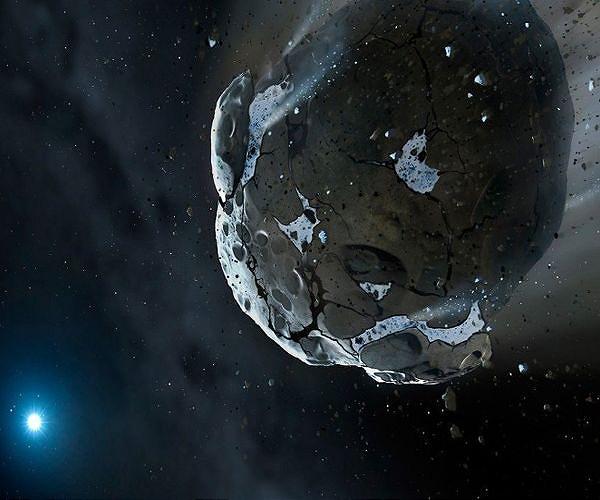
Asteroids may have provided up to half of the Earth's ocean water, new research shows. Arizona State University recently found water in fragments of an asteroid known as Itokawa. This discovery suggests impacts from other asteroids during the early parts of Earth's history may have sourced much of the water for the planet's oceans. Researchers published the findings Wednesday in the journal Science Advances. "We found the samples we examined were enriched in water compared to the average for inner solar system objects," Ziliang Jin, a researcher at Arizona State University and study lead author, said in a news release. The samples were taken from an asteroid known as Itokawa during Japan's Hayabusa space probe mission. Itokawa is approximately 1,800 feet long and between 700 and 1,000 feet wide. ASU researchers got a hold of the samples and found they contained a mineral called pyroxene. Terrestrial samples analyzed by the researchers also had pyroxene. This similarity hints that water from other asteroids may have helped populate the Earth's oceans. "Until we proposed it, no one thought to look for water," said Maitrayee Bose, a researcher at ASU and study co-author. "I'm happy to report that our hunch paid off." To further this research, NASA has scheduled a mission to collect samples from the asteroid Bennu in summer 2020 and bring them back to Earth by 2023. "The Hayabusa mission to Itokawa has expanded our knowledge of the volatile contents of the bodies that helped from Earth," Bose said. "It would not be surprising if a similar mechanism of water production is common for rocky exoplanets around other stars."
French aquarium sued over hammerhead shark deaths Lille, France (AFP) April 29, 2019 An ocean conservation group said Monday it had filed suit against a French aquarium over the premature deaths of 30 endangered hammerhead sharks. The move came after the Nausicaa aquarium in the northern French port city of Boulogne-sur-Mer said on Thursday that its last hammerhead, acquired in Australian waters eight years ago, had died from a fungus infection. It had stopped feeding three weeks earlier and been placed under observation. The shark died from the same fungus that caused the d ... read more
|
|||||||||||||
| The content herein, unless otherwise known to be public domain, are Copyright 1995-2026 - SpaceDaily. All websites are published in Australia and are solely subject to Australian law and governed by Fair Use principals for news reporting and research purposes. By using our websites you consent to cookie based advertising. If you do not agree with this then you must stop using the websites from May 25, 2018. Privacy Statement. Additional information can be found here at About Us. |

 del.icio.us
 Digg
Digg Reddit
 Google







