| . |  |
. |
| . | |
. |


France To Create Coal Tax, Tighten Pollution Measures
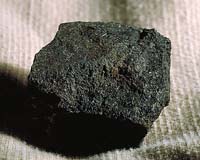
Paris (AFP) Nov 13, 2006 The French government announced measures Monday to tighten pollution taxes with the creation next year of a coal tax and a 10-percent increase in taxation of industrial and air transport pollution. France also wanted to examine quickly with European partners a "carbon tax" on imports of industrial goods from countries which "refused to commit themselves in favor of the Kyoto protocole after 2012", Prime Minister Dominique de Villepin said. Villepin outlined the measures following a French ministerial meeting on sustainable development. The Kyoto protocol requires industrialised countries to reduce emissions of six greenhouse gases by 5.2 percent by a target of 2008-2012 compared with their 1990 levels. In remarks on the French coal and industrial pollution taxes, Villepin said: "We have decided to reinforce the principle of 'polluter-payer'. "We are creating a tax on coal and are raising taxes on industrial pollution and wastes by 10 percent." Industrial groups that already benefit from an environmental certification would not be concerned, however. Coal would be subject to a levy of 1.19 euros per megawatt hour of energy produced. The government estimates that the new taxes would raise around 50 million euros (64 million dollars), to be spent on actions against global warming such as fiscal support for the development of renewable heating sources. Taxes on air transport pollution would pay for sound-proofing of housing located near airports. Villepin also said he wanted to study the possibility of charging a fee for vehicles that circulate in the center of major cities, such as London's congestion charge that first took effect in February 2003. On the European level, France will present EU members with "concrete proposals" in the first quarter of 2007 to tax industrial imports from countries that snub Kyoto Protocol requirements after 2012. "Europe must use all its weight to refuse" various kinds of "environmental dumping", Villepin said. Referring to tough UN-sponsored talks on climate change currently taking place in Kenya, the French premier added: "The difficulty of negotiations in Nairobi shows that certain countries could be tempted to refuse to commit themselves to fresh efforts after 2012." With the development of eco-friendly technologies, however, "we now have a valid argument to convince our partners that the environment is not just a constraint but also a wonderful opportunity for economic development".
earlier related report However, even more promising, California, the northeastern US states and Australian states were also looking at ways of linking up to the system, she said. The United States has refused to ratify the Kyoto Protocol, a United Nations treaty that requires industrialised nations to curb their emissions of six gases blamed for global warming. Currently, the EU trading scheme only covers big energy-intensive industrial plants and power generators, but in the future the commission would also like to bring in smaller industrial energy users. It also plans to propose including aviation in the scheme in the coming months. Among other ideas under consideration, the commission was looking at the possibility of including nitrus oxide (N2O) from ammonia production and methane from coal mines. The ideas are being floated as part of a review of the emissions trading scheme in order to make revisions in the second half of 2007 for the third trading period starting in 2013. The scheme got off the ground in 2005 and an initial trial phase runs until next year. The commission is currently studying member states' plans to allocate emissions quotas to industry for the second period running from 2008 to 2012. The trading system is supposed to be the cornerstone of European Union efforts to cut greenhouse gas emissions under the Kyoto Protocol, but its credibility has taken a beating recently because member states are allotting more permits to pollute than industrial plants need. After issuing more quotas than polluters could use in 2005, the European Commission has said that many the member states that have filed their allocation plans for the 2008-2012 period so far have once again printed more permits to pollute than needed. Over 50 European economists and the WWF environmental group warned last week that EU governments risked undermining the basic economics of the scheme by not providing enough scarcity in emissions quotas.
Source: Agence France-Presse Related Links UN Framework Convention on Climate Change The Air We Breathe at TerraDaily.com
 Phytoplankton Cloud Dance
 Atlanta GA (SPX) Nov 13, 2006
Atmospheric scientists have reported a new and potentially important mechanism by which chemical emissions from ocean phytoplankton may influence the formation of clouds that reflect sunlight away from our planet. This intimate connection between life and the environment of Earth could have profound implications for the future of our planet's global ecosystem. |
|
|

| The content herein, unless otherwise known to be public domain, are Copyright 1995-2006 - SpaceDaily.AFP and UPI Wire Stories are copyright Agence France-Presse and United Press International. ESA PortalReports are copyright European Space Agency. All NASA sourced material is public domain. Additionalcopyrights may apply in whole or part to other bona fide parties. Advertising does not imply endorsement,agreement or approval of any opinions, statements or information provided by SpaceDaily on any Web page published or hosted by SpaceDaily. Privacy Statement |