| . |  |
. |
| . | |
. |


Feature: Brussels Sprouts Museum For Europe
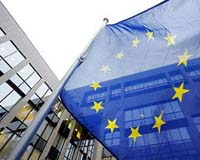
Brussels (UPI) Aug 24, 2005 Several years ago, when this correspondent was visiting the Bayeux Tapestry in Normandy, a French lady asked her child: "So, which ones are the baddies?" "Those ones," said the young girl, pointing to the English troops massing outside Hastings to repel the Norman invasion of Britain in 1066. "Good girl," replied her mother. The episode points to the perils of trying to write the history of the continent from a European, rather than a national, perspective. "I would be the first to admit that the idea of writing the history of Europe is loaded," says Elie Barnavi, professor of European History at Tel Aviv University in Israel. Barnavi should know. For most of the past eight years, the former ambassador to France has been an adviser to the Museum of Europe association - a body that plans to open a permanent exhibition dedicated to Europe's past in 2007. The museum, which will be housed in the European Parliament's new snaking glass headquarters in Brussels, aims to tell the story of European integration from the Middle Ages until the present day. Critics have already accused the largely Belgian group behind the scheme of attempting to airbrush history by focusing on the last 60 years of peace and prosperity rather than the previous 3,000 years of wars, famines, invasions, plagues and pogroms. "The people involved in this project are fiercely pro-European," admits Barnavi. "But if you show a rosy history of Europe it is intellectually dishonest. You have to show the darkest periods of European history, because -- after all - Adolf Hitler was a European with a definite idea of how Europe should be." Painting a "warts and all" picture of the continent also serves a political purpose, providing a contrast between the Hobbesian Europe of war and destruction that existed prior to 1945 and the Kantian "idyll" that was created by the EU's founding fathers after World War II. In one of the museum's zones, entitled "Europe, Year Zero," visitors will enter a "sober, spare and poignant" black room with pictures of bombed European cities on the floor and the death toll of the war projected "like bloodstained film credits" onto the walls. The message? "While today the Union may seem to be the most natural thing in the world, just yesterday Europe was in ruins." The next room - "The Fathers of Europe" - will provide a striking comparison. "Here everything will be calm, relaxed, almost with a family atmosphere," says the museum's blurb. The men who created the EU, such as Jean Monnet and Robert Schuman, will be portrayed leaning over a cradle with a steel ingot in the place of a baby. The Bethlehem-inspired image is meant to show how the pooling of coal and steel resources between France and Germany gave birth to the modern European ideal in the early 1950s. The aim of the museum's backers, which include the Belgian government, the EU institutions and Belgian blue-chip companies, is to show that history has not ended - as American academic Francis Fukuyama boldly stated after the fall of the Berlin Wall - and that Europe's achievements cannot be taken for granted. "The vast majority of the population has turned its back on history because they don't live anymore in the world of war and catastrophe," says the brochure. The nonprofit body behind the museum also hopes the interactive exhibition, which will throw its doors open to the public shortly before the 50th anniversary of the EU's foundation in May 2007, will help bring the Union closer to the citizens it is meant to represent. The rejection of the EU's first ever constitution by French and Dutch voters three months ago highlighted the gap between Brussels bureaucrats, who see greater EU integration as the solution to the continent's ills, and a large chunk of the European populace who view the EU as cold, distant and technocratic. "People don't feel Europe and they don't feel Brussels," says Barnavi. "The idea is to bring some life into a soulless, threatening process." The Museum of Europe, which will occupy almost 60,000 sq. ft. of prime office space, will certainly inject a much-needed dose of color and culture into the drab, gray EU quarter of the Belgian capital. In addition to two floors of permanent and temporary exhibitions, there will be a cafeteria serving samples of European cuisine, a gift shop, a rest area and a children's zone showing young visitors the variety of customs and cultures in Europe. Kids will be able to smell the typical scents of childhood - orange-blossom from Spain, ginger biscuits for Belgium and the odor of birch branches in a Finnish sauna. They will also be able to hear children's stories from across the continent, learn about languages, songs, fairies and monsters from other countries and even buy a selection of European sweets in the souvenir shop. "In this way, the children will become aware of the fact that, although they are all alike (they like to play, love sweets etc.), Europe has not wiped out their differences," says the museum's promo literature. This may sound slightly saccharine, but even most grown-ups would probably agree it is possible to be Flemish, Belgian and European at the same time and proud of one's national roots as well as one's common European heritage. Related Links SpaceDaily Search SpaceDaily Subscribe To SpaceDaily Express
 Analysis: Very Old Europe
 Brussels (UPI) Aug 18, 2005
The European Commission, the EU's executive arm that drafts legislation, keeps a beady eye on member states' compliance with Union laws and manages the bloc's $120 billion a year budget, is not given to existential musings. |
|
|

| The content herein, unless otherwise known to be public domain, are Copyright 1995-2006 - SpaceDaily.AFP and UPI Wire Stories are copyright Agence France-Presse and United Press International. ESA PortalReports are copyright European Space Agency. All NASA sourced material is public domain. Additionalcopyrights may apply in whole or part to other bona fide parties. Advertising does not imply endorsement,agreement or approval of any opinions, statements or information provided by SpaceDaily on any Web page published or hosted by SpaceDaily. Privacy Statement |