| . |  |
. |
| . | |
. |


Evolutionary Study Shows Beetles Are Life's 6-Legged Survivors
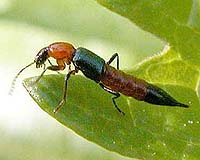
London, UK (SPX) Dec 21, 2007 Most modern-day groups of beetles have been around since the time of the dinosaurs and have been diversifying ever since, says new research out in Science. There are approximately 350,000 species of beetles on Earth, and probably millions more yet to be discovered, accounting for about 25% of all known life forms on the planet. The reason for this large number of beetle species has been debated by scientists for many years, but never resolved. Now a team of scientists has shown that large numbers of modern-day beetle lineages evolved very soon after the first beetles originated, and have persisted ever since. Many modern-day lineages first appeared during the Jurassic period, when the major groups of dinosaurs appeared too. Lead scientist on the study, Professor Alfried Vogler from Imperial College London's Department of Life Sciences and the Natural History Museum's Department of Entomology, explains: "The large number of beetle species existing today could very well be a direct result of this early evolution and the fact that there has been a very high rate of survival and continuous diversification of many lineages since then." The team behind the new study - the most extensive of its kind to date - used DNA sequencing and fossil records to compile a comprehensive evolutionary 'family tree' for beetles. By comparing DNA sequences from 1,880 beetle species, the scientists were able to group beetle species that are descended from a common ancestor, enabling them to build an evolutionary tree for all the species included. Fossils of known ages were then used to date key moments of evolution and diversification on the tree. Prior to this study the survival success of beetles had been attributed to herbivory - feeding on plants - and the rise of flowering plants in the Cretaceous era, which started some 140 million years ago. However, mapping species numbers onto the evolutionary tree shows that many modern beetle lineages significantly pre-date the appearance of the first flowering plants. Beetles have displayed an exceptional ability to seize new ecological opportunities and develop a great range of life styles and feeding types, explains Professor Vogler. "Unlike the dinosaurs which dwindled to extinction, beetles survived because of their ecological diversity and adaptability," he says. The scientific team says that understanding the evolution of beetles is an important part of understanding the natural world: "With beetles forming such a large proportion of all known species, learning about their relationships and evolution gives us important new insights into the origin of biodiversity and how beetles have triumphed over the course of nearly 300 million years," said Professor Vogler. Community Email This Article Comment On This Article Related Links Imperial College London Darwin Today At TerraDaily.com
 Squirrels Use Snake Scent
 Davis CA (SPX) Dec 20, 2007
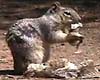
California ground squirrels and rock squirrels chew up rattlesnake skin and smear it on their fur to mask their scent from predators, according to a new study by researchers at UC Davis. Barbara Clucas, a graduate student in animal behavior at UC Davis, observed ground squirrels (Spermophilus beecheyi) and rock squirrels (Spermophilus variegates) applying snake scent to themselves by picking up pieces of shed snakeskin, chewing it and then licking their fur. |
|
|

| The content herein, unless otherwise known to be public domain, are Copyright 1995-2007 - SpaceDaily.AFP and UPI Wire Stories are copyright Agence France-Presse and United Press International. ESA Portal Reports are copyright European Space Agency. All NASA sourced material is public domain. Additional copyrights may apply in whole or part to other bona fide parties. Advertising does not imply endorsement,agreement or approval of any opinions, statements or information provided by SpaceDaily on any Web page published or hosted by SpaceDaily. Privacy Statement |