| . |  |
. |
| . | |
. |


Energy Techs Cut Path To Reduced Emissions
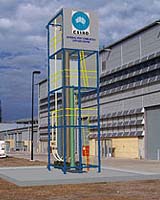
Canberra, Australia (SPX) Jan 23, 2006 A variety of technological advances being developed by CSIRO can dramatically reduce Australia's greenhouse gas emissions, according to CSIRO's Chief of Energy Technology, Dr David Brockway. One of the key initiatives being developed by CSIRO's Division of Energy Technology and Energy Transformed Flagship, known as Post Combustion Capture (PCC), can reduce carbon dioxide (CO2) emissions by more than 85% from existing coal and gas-fired power stations when coupled with carbon storage. PCC works by capturing greenhouse emissions after the fuel is burnt in a power station. It can be retro-fitted to existing power plants, integrated into new power stations and used in conjunction with renewable systems such as solar power to minimise efficiency losses from power stations. CSIRO is currently constructing a pilot PCC plant in Newcastle which will be coupled with solar power. Dr Brockway says breakthrough technologies such as PCC, together with changes in energy consumption patterns and other incentives are needed to make the deep cuts necessary in Australia's greenhouse emissions. 'There is no doubt that fossil fuels will remain the principal energy source for the foreseeable future, both in Australia and worldwide,' Dr. Brockway says. 'In the longer term, however, the ultimate objective is a renewable energy economy, though the transition to this point is still likely to be many decades away.' Fossil fuel combustion for stationary energy production is responsible for 49% of Australia's greenhouse gas emissions, far ahead of the agriculture (18%) and transport (15%) sectors. Dr John Wright, Director of CSIRO's Energy Transformed Flagship, says addressing the strong growth in Australia's energy consumption needs a balanced approach. 'A cleaner energy future for Australia will require technologies that are revolutionary, practical and affordable. This requires an active research, development and demonstration program to reduce the greenhouse intensity of technologies using fossil fuels while addressing the need to reduce consumption and develop affordable renewable energy technologies,' Dr Wright says. CSIRO is undertaking research across a range of areas, including: low-emissions technologies for fossil fuel use and efficient coal production; renewable energy and energy storage systems; potential use of hydrogen in the energy cycle; distributed energy generation; energy management and reducing the environmental consequences of energy use. Backgrounder - CSIRO's low emission energy technologies at a glance:
Fossil fuels In partnership with industry, governments and CRCs, CSIRO is developing new clean coal technologies to dramatically reduce greenhouse gas emissions. These include:
Post Combustion Capture (PCC) PCC enables the continued use of coal and will meet the expectation of a step reduction in Australia's CO2 emissions from coal-fired power stations. PCC is a technology to capture greenhouse emissions after the fuel is burnt in a power station. It can be retro-fitted to existing power plants and integrated into new power stations.
Coal gasification This research investigates technologies to achieve high efficiency coal based power systems capable of operating with near zero emissions. This research addresses coal and power industry needs to understand the suitability and performance of Australian coals for use in emerging power generation technologies.
Gas separation Gas separation represents around 40 percent of the cost of a clean coal gasification plant so advances in gas cleaning are expected to have considerable impact on the long term cost base of energy and also enables the CO2 stream to be readied for sequestration.
Sequestration Sequestration into deep unmineable coal seams could be particularly important for power generators in NSW and Queensland which are generally located close to coal seams. The impact impacts of the project will be economic (by ensuring the continued viability of coal-fired power stations), environmental (through reduced CO2 emissions) and social impacts (by ensuring continued access to cheap power from fossil fuels).
Renewables CSIRO is constructing the multi-million dollar National Solar Energy Centre (NSEC) at the CSIRO Energy Centre in Newcastle. The NSEC is the largest solar array in the southern hemisphere and arguably the most modern and flexible in the world. Our research work in the renewables area also includes solar fossil hybrids and the development of hydrogen technologies.
Energy Storage CSIRO's work in energy storage includes research into high performance batteries, supercapacitors, and fuel cells. This work has practical applications for telecommunications, notebook computers, household electronics, remote area supply systems and environmentally friendly transport.
Distributed energy The concept of distributed energy involves the local generation of power, heat and cooling using emerging gas technologies and integrating with selected renewables and traditional generation. Various distributed energy technologies are showcased at the CSIRO Energy Centre. For example microturbine gas engines roughly the size of a household refrigerator are operated at the Centre to demonstrate co-generation. That is, recovering the heat from exhaust gas and using it for heating and cooling applications ranging from hot water to building air-conditioning. Related Links CSIRO
 Iran, Nigeria Lead To Oil Spike
 Washington (UPI) Jan 17, 2006
Oil prices are likely to continue to rise amid nuclear tensions with Iran and political instability in Nigeria, experts say. |
|
|

| The content herein, unless otherwise known to be public domain, are Copyright 1995-2006 - SpaceDaily.AFP and UPI Wire Stories are copyright Agence France-Presse and United Press International. ESA PortalReports are copyright European Space Agency. All NASA sourced material is public domain. Additionalcopyrights may apply in whole or part to other bona fide parties. Advertising does not imply endorsement,agreement or approval of any opinions, statements or information provided by SpaceDaily on any Web page published or hosted by SpaceDaily. Privacy Statement |