| . |  |
. |
| . | |
. |


 by Staff Writers Quito (AFP) Aug 19, 2020
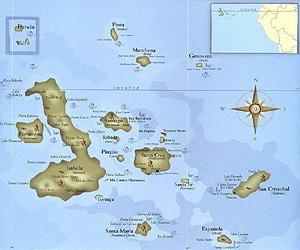
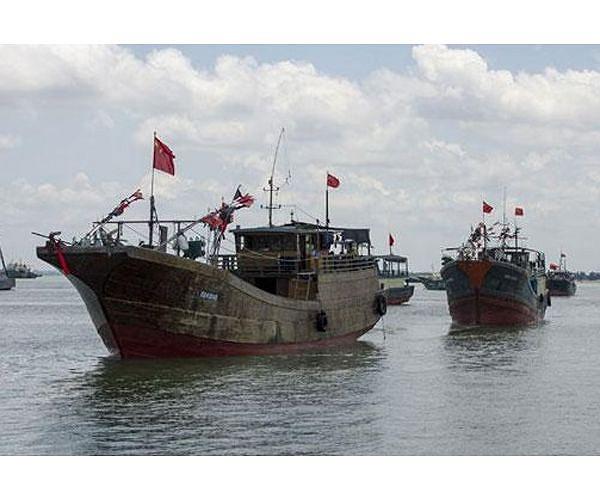
Ecuador reported Tuesday that nearly half of the Chinese fishing boats that roam the Galapagos Islands have turned off their tracking systems, making it impossible to locate them. The Ecuadorian Navy detected 149 ships that had turned off their transponders, a device that allows authorities to know where they are, defense minister Oswaldo Jarrin told a press conference. Jarrin said the fleet, made up mostly of Chinese boats, has increased from 260 to 325 since mid-July, when their presence was announced near the exclusive economic zone of the Galapagos, whose wildlife is protected. If the tracking systems are turned off," it is no longer possible to identify where they are, who they are or what their data or identification of origin is," the minister said. Jarrin said the boats remain in international waters, and so far "no vessel or fishing boat has entered the exclusive economic zone" of the archipelago, a UNESCO heritage site that inspired Charles Darwin's theory of evolution. The minister added, though, that turning off the satellite identification transponders is already a "violation." After the presence of the fishing fleet became known in July, Ecuador voiced disquiet to China, leading to negotiations between the countries. Beijing in early August banned its vessels from fishing near the Galapagos from September to November this year. Ecuador in 2017 captured a Chinese-flagged boat carrying 300 tons of marine fauna, including an endangered shark species, within the Galapagos marine reserve. A World Heritage site, the Galapagos has a 51,000-square-mile (133,000 square kilometers) marine reserve that protects all its species. There is a 15,000-square-mile sanctuary between Darwin and Wolf islands that is home to the largest shark population in the world. The Galapagos, located 620 miles west of Ecuador, is a fragile ecosystem that harbors the largest number of different animal species on the planet.
Scientists discover 30 new species in Galapagos depths Quito (AFP) Aug 17, 2020 An international team of marine scientists have discovered 30 new species of invertebrates in deep water surrounding the Galapagos, the Ecuadoran archipelago's national park authorities announced Monday. The deep-sea experts discovered fragile coral and sponge communities including 10 bamboo corals, four octocorals, one brittle star and 11 sponges - as well as four new species of crustacean known as squat-lobsters - the Galapagos National Park (GNP) said in a statement. "These discoveries incl ... read more
|
|||||||||||||
| The content herein, unless otherwise known to be public domain, are Copyright 1995-2026 - SpaceDaily. All websites are published in Australia and are solely subject to Australian law and governed by Fair Use principals for news reporting and research purposes. By using our websites you consent to cookie based advertising. If you do not agree with this then you must stop using the websites from May 25, 2018. Privacy Statement. Additional information can be found here at About Us. |

 del.icio.us
 Digg
Digg Reddit
 Google







