|
 |
 |
 |
 |
 |
 |
 |
 |
 |

| . |  |
. |
China's Taikonauts Fulfil Tsien's Vision
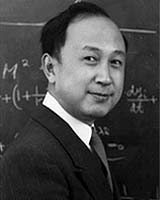
Washington (UPI) Oct 13, 2005 China's achievement in sending taikonauts Cols. Fei Junlong and Nie Haisheng into orbit on the manned Shenzhou-6 space craft for a four or five day mission is the second step in a long campaign of amazing vision mapped out by the genius founder of its space program half a century ago. Within the next 10 to 15 years, China is determined to become the dominant space power and build first its own massive, permanent, orbiting space station as a stepping stone into the Solar System and then even build and man a long-term base on the Moon. Can they do it? Yes. The first thing to recognize about the Chinese vision is that it is serious and backed by a profound political commitment. Former President Jiang Zemin was the first Chinese leader determined to make his nation a major space power, and eventually the dominant one. And his successor, current President Hu Jintao, shares that commitment. But the program they have backed had been created decades earlier by a U.S.-educated genius called Tsien Hsue-Shen. Tsien was a member of the first heroic generation of U.S. rocket scientists and space visionaries. He was a founder of the Jet Propulsion Laboratory in Pasadena, Calif. He was even included on the team of U.S. scientists who went to investigate Nazi Germany's groundbreaking V-2 rocket program after World War II. Researcher Mark Wade, writing about China's space program on the www.astronautix.com Web site described him as "one of the senior scientists advising the U.S. military on postwar development of rocket technology." But in 1950 Tsien, according to Wade, was accused of being a Communist Party member and his security clearance was revoked. He was then held under virtual house arrest for five years before being allowed to return to China in 1955. He then led China's space program for decades. Tsien retired in 1991, a year before Jiang gave the go ahead for a long-term program to finally put a Chinese astronaut, or taikonaut, into the heavens. But the grand strategy he had crafted for his vast nation's venture into outer space lived on through the many scientists, engineers and administrators he had taught and trained. And Tsien's master plan was taken straight from the one Werner Von Braun and his colleagues had pressed -- in vain -- on U.S. leaders through the 1950s. In a series of best-selling books, including "The Conquest of Space," "Across the Space Frontier" and "The Conquest of the Moon," Willy Ley, Von Braun and other former German rocket scientists sketched out a technically feasible vision of building first a massive, rotating circular space station in high earth orbit. Even then, they visualized it as a "port" to more easily project manned space expeditions to the Moon and even beyond. And they also saw such a space station as essential to the longer-term project of establishing a space colony on the Moon. The space station was to be an assembly point. "Big dumb booster" rockets would ferry up to it the components for spaceships that would be assembled there. Then they would fly to the Moon and back with expeditions of up to 50 astronauts at a time. Since the astronauts would only have to be ferried back to the space station -- where specialized re-entry vehicles would take them back to earth -- the Moon ships could be made massive and ungainly and would not be limited by the fiery high temperatures of high-speed re-entry through the Earth's upper atmosphere. The kind of space station, booster rockets, low orbit re-entry vehicles and the designs of the space station and Moon ship were worked out in these books in remarkable detail. The scientists who created them were far from being impractical dreamers. They were the engineering geniuses who had already created Adolf Hitler's V-2 rockets and who then built the first successful generation of U.S. satellite-launching boosters. Their ultimate achievement, led by Von Braun, was the magisterial Saturn-V booster that carried 30 American astronauts on 10 Apollo space missions to and around the Moon -- including the Apollo 8, Apollo 10 and Apollo 13 missions, which did not land on it. But when the great Cold War space race between the United States and the Soviet Union hit high gear in the 1960s, the "Engineers' Dreams" of Ley and Von Braun for a rational, long-lasting, carefully planned program of space exploration building permanent human footholds in high Earth orbit and on the surface of the Moon was rapidly scrapped by the Americans and Soviets alike. The Soviet commitment to manned space exploration was rapidly scaled back after its state sponsor, Nikita Khrushchev, was ousted from power in 1964. In the United States, it was President John F. Kennedy's dramatic 1961 pledge to beat the Soviets to the Moon by the end of that decade that dealt the death blow to meaningful manned space exploration. The crazed rush to meet that deadline and beat the Soviets drove NASA to send smaller, cheaper, quickly feasible manned missions that could do no more than land a couple of astronauts at a time on the Moon to be televised running around, playing golf, or picking up what ever interesting-looking rocks were within walking distance. Now, for the first time in more than 40 years, a major world power has committed itself to an ambitious program of manned space exploration. In effect, China, following the master plan mapped out for it by Tsien, has committed itself to the old Ley-Von Braun vision in a way the United States and the Soviet Union never did. The technology for this program was considered technically feasible half a century ago by the most successful rocket engineers who ever lived. And China also now has the accumulated experience of the American and Soviet/Russian space programs to draw upon, and even more important, can avoid their mistakes. Yang's successful flight is far more than a small step for mankind, it is a giant leap launching a whole new era of space exploration that will proceed far more slowly -- but has the potential to go much farther -- than the dramatic U.S.-Soviet space race of the 1960s. Next: China avoided NASA's mistakes Related Links SpaceDaily Search SpaceDaily Subscribe To SpaceDaily Express
 Rocket Black Box Found In Inner Mongolia
 Otog, Inner Mongolia (XNA) Oct 13, 2005
The magnetic recorder, or "black box", that disengaged from the Long March II F rocket carrying the Shenzhou-6 spacecraft into orbit, has been found here 45 minutes after the blast-off Wednesday morning. |
|
|

| The content herein, unless otherwise known to be public domain, are Copyright 1995-2006 - SpaceDaily.AFP and UPI Wire Stories are copyright Agence France-Presse and United Press International. ESA PortalReports are copyright European Space Agency. All NASA sourced material is public domain. Additionalcopyrights may apply in whole or part to other bona fide parties. Advertising does not imply endorsement,agreement or approval of any opinions, statements or information provided by SpaceDaily on any Web page published or hosted by SpaceDaily. Privacy Statement |