| . |  |
. |
| . | |
. |


 by Staff Writers Beijing (XNA) Mar 25, 2020
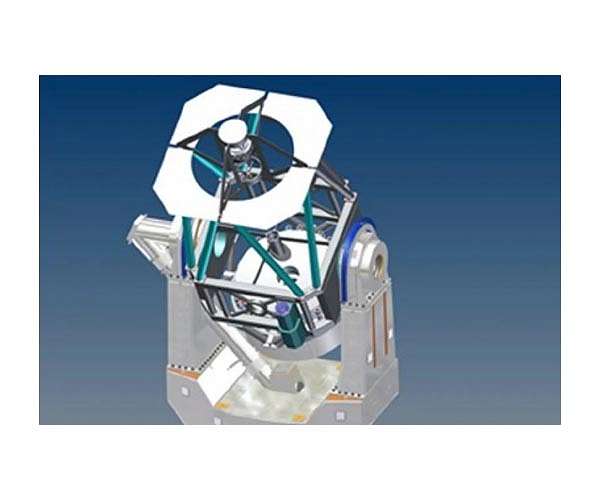
Scientists from from the Chinese Academy of Sciences announced Tuesday that they have built the country's first and one of the world's largest solar telescope, to better observe and forecast solar activity. The Chinese Large Solar Telescope (CLST), with a 1.8-meter aperture, was developed by the academy's Institute of Optics and Electronics. It caught the first batch of high-resolution images of the solar atmosphere on Dec. 10, 2019, an academy statement said. Many countries have stepped up efforts to build 2-meter and larger solar telescopes in recent years. The world's large solar telescopes that have been built include the 1.6-meter GST in the United States and the 1.5-meter GREGOR in Germany. The U.S. 4-meter solar telescope DKIST has not yet been put into operation, and the European 4-meter EST has just begun designing and developing. Previous to the CLST, the largest solar telescope in China was the 1-meter New Vacuum Solar Telescope developed by the academy's Yunnan Observatories. According to Rao Changhui, leading the project, the CLST will be equipped with a group of systems for adaptive optics, magnetic field detection and velocity field detection. As solar activity are increasingly frequent, space weather events will become more severe. In the future, the solar telescope will be used to observe solar activity, offering data support for solar research and space weather forecast, Rao said. Source: Xinhua News Agency
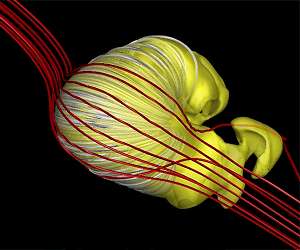
BU astrophysicist and collaborators reveal a new model of our heliosphere Boston MA (SPX) Mar 20, 2020 The heliosphere is a vast region, extending more than twice as far as Pluto. It casts a magnetic "force field" around all the planets, deflecting charged particles that would otherwise muscle into the solar system and even tear through DNA. However, the heliosphere, despite its name, is not actually a sphere. Space physicists have long compared its shape to a comet, with a round "nose" on one side and a long tail extending in the opposite direction. In 2015, using a new computer model and data fro ... read more
|
|||||||||||||
| The content herein, unless otherwise known to be public domain, are Copyright 1995-2026 - SpaceDaily. All websites are published in Australia and are solely subject to Australian law and governed by Fair Use principals for news reporting and research purposes. By using our websites you consent to cookie based advertising. If you do not agree with this then you must stop using the websites from May 25, 2018. Privacy Statement. Additional information can be found here at About Us. |

 del.icio.us
 Digg
Digg Reddit
 Google







