|
 |
 |
 |
 |
 |
 |
 |
 |
 |

| . |  |
. |
Cellular Grab For 2Ghz Harms Rural Satellite Consumers: SIA Report
Alexandria - May 29, 2001 The Satellite Industry Association (SIA) and Satellite Broadcasting and Communications Association (SBCA) today announced their opposition to a petition for rulemaking filed with the Federal Communications Commission (FCC) by Cellular Telecommunications & Internet Association (CTIA). In the petition, CTIA asks the Commission to reallocate mobile satellite services (MSS) spectrum in the 2 GHz band for other uses. SIA and SBCA believe that CTIA's petition requesting reallocation of MSS spectrum is unfounded and anti-consumer. Satellite services have a proven track record of being the best means of communications for rural areas in the U.S, and for situations that require instant or emergency communication in remote areas throughout the world. In the future, MSS will offer Third Generation (3G) voice and data services complementing those offered by terrestrial wireless service providers. Clayton Mowry, executive director of the Satellite Industry Association, pointed out that the International Telecommunication Union (ITU) allocated 3G spectrum for both terrestrial and satellite services at the 2000 World Radiocommunication Conference. The ITU designated spectrum at 2 GHz on a worldwide basis for 3G MSS. MSS is expanding from merely providing telephone service to remote locations to ensuring availability of broadband access to a large segment of the global population. Satellite-delivered 3G services will offer consumers high data rate broadband services such as handheld Internet access and videoconferencing that will compliment terrestrial based offerings. The MSS spectrum at 2 GHz is needed to ensure the availability of such services in areas beyond the reach of terrestrial cellular systems. Mowry said, "CTIA's claims about the viability of MSS are inconsistent with the global success of MSS in maritime, aeronautical and portable applications. The latent demand for mobile communication services in the great majority of the world where cellular cannot be economically deployed is unquestioned. CTIA is presenting a false trade between cellular and MSS spectrum use as the basis of its position. CTIA members cannot economically provide adequate cellular service to millions of Americans. Now they want to take spectrum away from the services that will best fill this gap in order to cheaply increase their capacity in a few lucrative urban markets. While we have always seen MSS as an ideal complement to cellular, the actions of the cellular industry in attacking MSS without concern for the public interest is deplorable." SIA and SBCA believe that handheld mobile satellite telephony is still in the early stage of development and should not have spectrum reallocated based on current subscriber numbers. It took over a decade for cellular phones to catch on in the U.S. and around the world. Yet, widespread cellular service does not adequately serve many communities in America and development of digital infrastructure is even further behind. The vast majority of American towns suffer not from a lack of cellular spectrum, but from a lack of infrastructure to use it. Even urban area capacity is likely to grow more rapidly through the deployment of dense infrastructure needed to support terrestrial 3G's shorter service range rather than through additional spectrum. Meanwhile, MSS is providing underserved populations with digital service now, and will bring 3G services to these areas where cellular and PCS are and will likely remain underdeveloped. Mowry noted that in a letter to Chairman Michael Powell, Senator Ted Stevens of Alaska recently stated that, "MSS systems have the unique ability to accomplish a host of public policy goals. Millions of Americans who live in rural areas currently have no mobile voice or data service. Millions more have only analog services. . . . For many Americans, an MSS network will be their best, if not their only, choice for fast digital connections." SIA members are already providing critical services to rural areas of the U.S. and across the globe. In Globalstar's first year of operation, the company provided mobile satellite phones to aid flood victims in Brazil and has provided free airtime to Sheriff Departments and other public safety agencies worldwide in search and rescue missions. Just this month, Iridium satellite phones played a critical role in the rescue of a doctor in the South Pole. MSS was also used extensively to support the Turkish Government's search and rescue efforts following a tragic earthquake in that country last year. Mowry added, "One cannot predict where a natural disaster or news event is going to require the immediate telecommunications infrastructure that MSS systems offer." SIA also believes that while some MSS operators are proposing flexible use of their spectrum, such innovative proposals should not be used as a reason to abandon MSS and the critical services it provides. Eight companies including: The Boeing Company, Celsat America Inc., Constellation Communications, Globalstar, ICO Services Ltd., Iridium LLC, Mobile Communications Holdings and TMI Communications Company LP have filed proposals to operate 2 GHz MSS systems in the United States. Related Links Satellite Industry Association Satellite Broadcasting and Communications Association SpaceDaily Search SpaceDaily Subscribe To SpaceDaily Express
 Orbital Offloads Navigation Business To Thales
 Paris - May 29, 2001
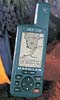
Thales and Orbital Sciences Corporation of the United States have reached an agreement whereby Thales will acquire all of Orbital Sciences' satellite navigation and positioning businesses for approximately US$70 million. |
|
|

| The content herein, unless otherwise known to be public domain, are Copyright 1995-2006 - SpaceDaily.AFP and UPI Wire Stories are copyright Agence France-Presse and United Press International. ESA PortalReports are copyright European Space Agency. All NASA sourced material is public domain. Additionalcopyrights may apply in whole or part to other bona fide parties. Advertising does not imply endorsement,agreement or approval of any opinions, statements or information provided by SpaceDaily on any Web page published or hosted by SpaceDaily. Privacy Statement |