| . |  |
. |
| . | |
. |


Arctic Carbon A Potential Wild Card In Climate Change Scenarios
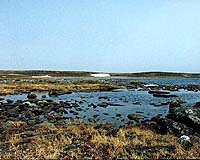
Arlington VA - Apr 21, 2004 The Arctic Ocean receives about 10 percent of Earth's river water and with it some 25 teragrams [28 million tons] per year of dissolved organic carbon that had been held in far northern bogs and other soils. Now an international team of U.S. and German scientists, including some funded by the National Science Foundation, have used carbon-14 dating techniques to determine that most of that carbon is fairly young and not likely to affect the balance of global climate. They reported their findings in the March issue of Geophysical Research Letters, a publication of the American Geophysical Union. Although the current carbon load does not seem likely to affect global climate significantly, they caution in their report that a well-documented Arctic warming trend could result in ancient carbon-a reservoir of the gas currently locked into peat bogs-being added to the mix and contributing to the well- documented Arctic warming trend. "If current warming trends in the Arctic continue, we can expect to see more of the old carbon now sequestered in northern soils enter the carbon cycle as carbon dioxide. This will act as a positive feedback, tending to enhance the greenhouse effect and accelerate global warming," said Ronald Benner, an NSF-funded researcher at the University of South Carolina. NSF is an independent federal agency that supports fundamental research and education across all fields of science and engineering, with an annual budget of nearly $5.58 billion. National Science Foundation funds reach all 50 states through grants to nearly 2,000 universities and institutions. The team studied rivers in northern Russia and Alaska, along with the Arctic Ocean itself. Benner conducted some of his research as part of the Western Shelf-Basin Interactions research project, which is jointly funded by NSF and the U.S. Office of Naval Research. Previously, scientists had not known the age of the carbon that reaches the ocean. Was it recently derived from contemporary plant material, or had it been locked in soils for hundreds or thousands of years and therefore not part of Earth's recent carbon cycle? The new findings complement recently published work by Laurence C. Smith, an NSF-funded researcher at the University of California, Los Angeles, indicating that massive Siberian peat bogs, widely known as the permanently frozen home of untold kilometers of moss and uncountable hordes of mosquitoes, also are huge repositories for gases that are thought to play an important role in the Earth's climate balance. Those gases, carbon dioxide and methane, are known to trap heat in the Earth's atmosphere, but the enormous amounts of the gases contained in the bogs haven't previously been accounted for in climate-change models. Related Links SpaceDaily Search SpaceDaily Subscribe To SpaceDaily Express
 Satellites Record Weakening North Atlantic Current
 Greenbelt - Apr 16, 2004
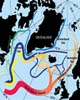
A North Atlantic Ocean circulation system weakened considerably in the late 1990s, compared to the 1970s and 1980s, according to a NASA study. Sirpa Hakkinen, lead author and researcher at NASA's Goddard Space Flight Center, Greenbelt, Md. And co-author Peter Rhines, an oceanographer at the University of Washington, Seattle, believe slowing of this ocean current is an indication of dramatic changes in the North Atlantic Ocean climate. |
|
|

| The content herein, unless otherwise known to be public domain, are Copyright 1995-2006 - SpaceDaily.AFP and UPI Wire Stories are copyright Agence France-Presse and United Press International. ESA PortalReports are copyright European Space Agency. All NASA sourced material is public domain. Additionalcopyrights may apply in whole or part to other bona fide parties. Advertising does not imply endorsement,agreement or approval of any opinions, statements or information provided by SpaceDaily on any Web page published or hosted by SpaceDaily. Privacy Statement |