| . |  |
. |
| . | |
. |


 by Brooks Hays Washington (UPI) Jul 6, 2017
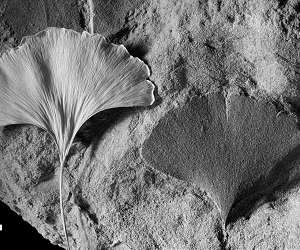
Thanks to a new molecular analysis technique, researchers have established relationships among 200-million-year-old plants for the first time. The findings -- detailed in the journal Nature Ecology and Evolution -- offer new insights into the habitats in which dinosaurs lived. Without genetic data, relationships among ancient plants have been difficult to establish. The earliest plant DNA fragments found to date are only 1 million years old. "We have solved many questions regarding these extinct plants' relationships," Vivi Vajda, a professor at Sweden's Lund University, said in a news release. "These are questions that science has long been seeking answers to." DNA has proven incapable of surviving intact for millions of years, so scientists turned their attention to organic molecules. Infrared spectroscopy allowed scientists to identify communities of biomolecules in the waxy membrane of Jurassic-era fossil leaves. To start, scientists studied the collections of organic molecules found in the membranes of modern plant leaves. They found consistent biomolecular patterns among groups of related plants. The biomolecular signatures allowed scientists to identify plants in a manner similar to DNA analysis. "The results from the fossil leaves far exceeded our expectations, not only were they full of organic molecules, they also grouped according to well-established botanical relationships, based on DNA analysis of living plants i.e. Ginkgoes in one group, conifers in another," said Vajda. The research allowed scientists to begin grouping ancient plants according to common biomolecular signatures. So far, researchers have shown two groups of Triassic- and Jurassic-era plants, Bennettites and Nilssonia, are closely related. "The great thing about the biomolecules in the leaves' waxy membranes is that they are so much more stable than DNA," said Per Uvdal, professor of chemical physics at Lund. "As they reflect, in an indirect way, a plants DNA they can preserve information about the DNA. Therefore, the biomolecules can tell us how one plant is related in evolutionary terms to other plants."
 New study reveals how frogs flourished after dinosaurs croaked
Miami (AFP) July 3, 2017 A massive asteroid strike that wiped out the dinosaurs millions of years ago created room for frogs to colonize the Earth, said a study Monday that shows how frogs became among the most diverse vertebrates in the world. As many as 10 types of frogs are believed to have survived the mass extinction some 66 million years ago, which erased three-quarters of life on Earth, said the report in the ... read more Related Links Explore The Early Earth at TerraDaily.com

|
|||||||||||||
| The content herein, unless otherwise known to be public domain, are Copyright 1995-2026 - SpaceDaily. All websites are published in Australia and are solely subject to Australian law and governed by Fair Use principals for news reporting and research purposes. By using our websites you consent to cookie based advertising. If you do not agree with this then you must stop using the websites from May 25, 2018. Privacy Statement. Additional information can be found here at About Us. |

 del.icio.us
 Digg
Digg Reddit
 Google






