| . |  |
. |
| . | |
. |


 by Staff Writers New Brunswick NJ (SPX) Jan 13, 2022
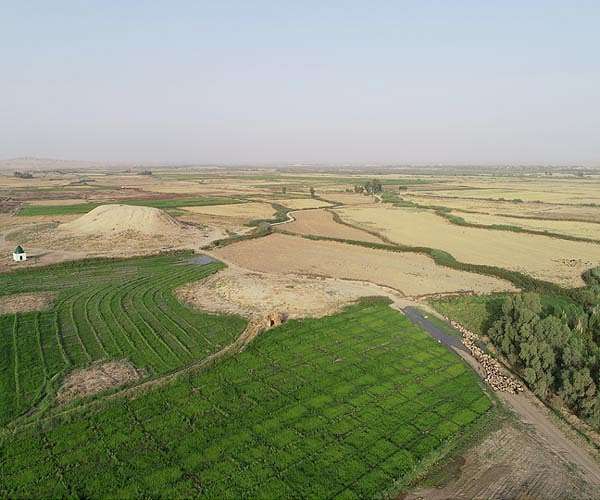
Rutgers researchers have unearthed the earliest definitive evidence of broomcorn millet (Panicum miliaceum) in ancient Iraq, challenging our understanding of humanity's earliest agricultural practices. Their findings appear in the journal Scientific Reports. "Overall, the presence of millet in ancient Iraq during this earlier time period challenges the accepted narrative of agricultural development in the region as well as our models for how ancient societies provisioned themselves," said Elise Laugier, an environmental archaeologist and National Science Foundation postdoctoral fellow in the School of Arts and Sciences at Rutgers University-New Brunswick. Broomcorn millet is an "amazingly robust, quick-growing and versatile summer crop" that was first domesticated in East Asia, Laugier added. The researchers analyzed microscopic plant remains (phytoliths) from Khani Masi, a mid-late second millennium BCE (c. 1500-1100 BCE) site in the Kurdistan region of Iraq. "The presence of this East Asian crop in ancient Iraq highlights the interconnected nature of Eurasia during this time, contributing to our knowledge of early food globalization," Laugier said. "Our discovery of millet and thus the evidence of summer cultivation practices also forces us to reconsider the capacity and resilience of the agricultural systems that sustained and provisioned Mesopotamia's early cities, states and empires." The discovery of broomcorn millet in ancient Mesopotamia was surprising for environmental and historical reasons. Until now, researchers thought that millet wasn't grown in Iraq until the construction of later 1st millennium BCE imperial irrigation systems. Millet generally requires summer precipitation to grow, but Southwest Asia has a wet-winter and dry-summer climate, and agricultural production is based almost entirely on crops grown during the winter, such as wheat and barley. Agricultural production is thought to be the basis for supporting and provisioning Mesopotamian cities, states and empires. The researchers' new evidence that crops and food were, in fact, grown in summer months means that previous studies likely vastly under-appreciated the capacities and resilience of ancient agricultural food-system societies in semi-arid ecosystems. The new study is also part of growing archaeological research showing that in the past, agricultural innovation was a local initiative, adopted as part of local diversification strategies long before they were used in imperial agricultural intensification regimes - new information that could have an impact on how agricultural innovations move forward today. "Although millet isn't a common or preferred food in semi-arid Southwest Asia or the United States today, it is still common in other parts of Asia and Africa," Laugier said. "Millet is a hearty, fast-growing, low-water requiring and nutritious gluten-free grain that could hold a lot of potential for increasing the resilience capacities of our semi-arid food systems. Today's agricultural innovators should consider investing in more diverse and resilient food systems, just as people did in ancient Mesopotamia." Laugier, a visiting scientist at Rutgers who received her Ph.D. and began her research on this topic at Dartmouth College, said the research team hopes to make phytolith analysis more common in the study of ancient Iraq because it could challenge assumptions about the history and practice of agriculture in the region.
Research Report: "Phytolith evidence for the pastoral origins of multi-cropping in Mesopotamia (ancient Iraq)"

Too much meat? Spain factory farming debate creates beef Madrid (AFP) Jan 9, 2022 Debate over the environmental impact of Spain's huge factory farming sector is heating up in the country, Europe's biggest meat consumer, and splitting its ruling coalition. In an interview published in British daily The Guardian, Consumer Affairs Minister Alberto Garzon lashed out against Spain's "so-called mega-farms", calling them unsustainable. "They find a village in a depopulated bit of Spain and put in 4,000, or 5,000, or 10,000 head of cattle," he said. "They pollute the soil, they ... read more
|
|||||||||||||
| The content herein, unless otherwise known to be public domain, are Copyright 1995-2026 - SpaceDaily. All websites are published in Australia and are solely subject to Australian law and governed by Fair Use principals for news reporting and research purposes. By using our websites you consent to cookie based advertising. If you do not agree with this then you must stop using the websites from May 25, 2018. Privacy Statement. Additional information can be found here at About Us. |

 del.icio.us
 Digg
Digg Reddit
 Google







