| . |  |
. |
| . | |
. |


 by Brooks Hays Washington (UPI) Jul 6, 2018
After analyzing ancient DNA samples, scientists now have a bit more clarity on how early humans first arrived in Southeast Asia. For decades, scientists have disagreed on how Southeast Asia was first populated. Some researchers believed an indigenous group of hunter-gatherers, called the Hòabìnhian, developed agricultural practices on their own, some 44,000 years ago. Others argued the hunter gatherers were replaced by rice growers who migrated from what's now China. Now, an analysis of 26 ancient DNA samples, collected from human remains in Malaysia, Thailand, the Philippines, Vietnam, Indonesia, Laos and Japan, suggests both groups are mistaken. Some of tested DNA fragments were dated to 8,000 years ago. Until now, the oldest tested samples were 4,000 years old. The results of the genetic survey, published this week in the journal Science, suggests a link between the Hòabìnhian people and the Jomon people of prehistoric Japan. "We put a huge amount of effort into retrieving ancient DNA from tropical Southeast Asia that could shed new light on this area of rich human genetics," Eske Willerslev, a professor at the University of Cambridge, said in a news release. "The fact that we were able to obtain 26 human genomes and shed light on the incredible genetic richness of the groups in the region today is astonishing." The latest findings undermine the primacy of the two competing theories. The peopling of Southeast Asia was a complex process, with as many as four different ancient populations contributing to the region's genetic history. "This is a far more complex model than previously thought," said Fernando Racimo, a geneticist at the University of Copenhagen's Natural History Museum. Scientists hope to continue unraveling the mysteries of Southeast Asia's genetic history as more DNA samples are recovered from ancient human remains.
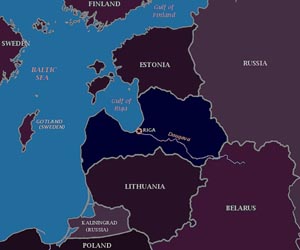
Lithuanians seek identity in their pagan roots Vilnius (AFP) July 2, 2018 Dancing around a blazing fire with garlands of wildflowers in their hair, members of Lithuania's Romuva neo-pagan community mark the summer solstice, as the Baltic state undergoes a revival of its pre-Christian beliefs. Skipping to the steady beat of drums, other singing revellers at the feast, known locally as Rasa, pass under an arbour decorated with flowers before throwing salt on an altar as an offering to ancient Baltic gods. "It's a beautiful tradition... at this time of year, everything's ... read more
|
|||||||||||||
| The content herein, unless otherwise known to be public domain, are Copyright 1995-2026 - SpaceDaily. All websites are published in Australia and are solely subject to Australian law and governed by Fair Use principals for news reporting and research purposes. By using our websites you consent to cookie based advertising. If you do not agree with this then you must stop using the websites from May 25, 2018. Privacy Statement. Additional information can be found here at About Us. |


 del.icio.us
 Digg
Digg Reddit
 Google







