| . |  |
. |
| . | |
. |


Analysis: Critics Condemn UK Terror Bill
London (UPI) Nov 03, 2005 The British government is facing a battle to get its controversial anti-terror proposals passed into law, as critics queue up to condemn the measures they argue will fuel the very extremism they are designed to combat. Ministers backed away from a crucial vote on the Terrorism Bill Wednesday night as an earlier vote saw the government's majority slashed to just one, the lowest since its election in 1997. Fearing a damaging defeat, Home Secretary Charles Clarke appealed for time to hold negotiations with his opposition counterparts. He promised to bring forward modified proposals when the bill returned to Parliament for further debate next week. Politicians from all parties, senior judges, lawyers, Muslim leaders and human rights groups have voiced opposition to three key measures in the bill: Police powers to detain suspects without charge for up to 90 days, a new offense of encouraging or glorifying terrorism, and a related ban on extremist organizations. In an interview with United Press International, Shami Chakrabarti, lawyer and director of leading human rights group Liberty, explained why so many people believed the policies would be counterproductive in the fight against terrorism. The policies were "a desperate mistake," she said, not only because they undermine "ancient democratic rights and freedoms" but because of their negative effects on public safety. A detention of 90 days was a period equivalent to that normally served by someone on a six month prison sentence, she noted. The problem would not be with those people who were eventually charged, but with those who were detained on suspicion and then released without charge after 80 or 90 days detention, she said. "They will be young Muslim men, and they will go back home and the extremists will have visited their parents and their younger brothers in the meantime. And they will say -- and this is what happened in Northern Ireland when internment was used -- the extremists and the terror groups will say that's British justice. And who protected you when you were rounded up in that way? We protected you, we support your family. It's a disastrous policy in terms of actually countering terrorism." More proportionate action could be taken to help police in their investigations, she said, such as allowing phone tap evidence to be used in court and providing more resources to enable inquires to be sped up. The proposed offense of encouraging terrorism was also "incredibly dangerous" to democracy, Chakrabarti said. There was no need for the speaker to have intended to incite an act of terrorism, or for such an act to have occurred as a result, she noted. The prosecution threshold was a "negligence test," meaning that the defendant had said something that they ought reasonably to have known was likely to encourage "somebody, somewhere" into terrorism. She continued: "In a democracy, to have a negligent speech offense, a loose talk offense is incredibly dangerous." In 2003, Prime Minister Tony Blair's wife, Cherie, caused international uproar when she said young Palestinians felt they had no hope but to blow themselves up, Chakrabarti noted. "She was essentially accused of saying something silly, sloppy, negligent. So she arguably would have committed this offense, and the maximum penalty is seven years imprisonment." The definition of terrorism in British law was so broad that it covered politically motivated threats or acts of violence against property and people anywhere in the world, including in a dictatorship, she said. Expressing support for the overthrow of tyrannous regimes would therefore be criminalized. "If I were to say, for example, the rule of law is dead or non-existent in North Korea, Burma, Zimbabwe, and ... I don't believe in harming people, but I think it would be legitimate for those governments to be brought down by force, perhaps government buildings should be defaced or destroyed after giving appropriate warnings so that people aren't hurt, and this is a legitimate way to act against an oppressive, tyrannous, non-democratic regime, I've committed the offense. "That is obviously completely unacceptable, and I say counterproductive because a lot of British Muslims in particular will want to speak quite vociferously about Middle Eastern politics. I might well disagree with some things they say but is it sensible to make speech a criminal offense in that way? "They're not people who are blowing people up on the underground or who are at all sympathetic to that. But you're alienating people who are your natural allies and turning them into enemies by criminalizing them." A related proposal to ban extreme political organizations that were not terrorist in nature was also worrying, she said. Blair announced his intention in August to ban Hizb-ut-Tahrir, an Islamic political party which advocates the establishment of a caliphate across the Muslim world, but through exclusively non-violent means. Chakrabarti said: "We're talking about organizations who believe everything that I don't. But it is an important irony that if you are a democrat, you believe in the free speech rights of people who wouldn't perhaps grant you the same free speech. "This ultimately is how you win the argument, and it's by preserving democratic rights like the right to a fair trial and the right to free speech that we ultimately win the long term struggle against tyrannous dictatorships and those who think its acceptable to blow people up or torture people to achieve political change." She added: "Destroying the ideal is not particularly helpful in any kind of propaganda effort." Chakrabarti said she had high hopes the "ridiculously broad" offense of encouraging terrorism would be narrowed, and that the power to ban extreme rather than terrorist organizations would be either narrowed or deleted altogether. "My fear about the 90 days (detention) if I'm honest is that unholy deals have already been done, and Labor backbenchers are going to kid themselves that they are heroes by suggesting 28 days... That would still be double the existing limit." The government would not get the bill onto the statute book in its present form, she said. And unless serious concessions were made, such measures were also likely to be found incompatible with the European Convention on Human Rights, and struck down by the judiciary. Related LinksSpaceDaily Search SpaceDaily Subscribe To SpaceDaily Express
 Europe Shocked By CIA Prison Camp Claims
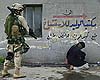 Brussels (UPI) Nov 03, 2005
Allegations that the Central Intelligence Agency is running prison camps for suspected al-Qaida terrorists in Eastern Europe have sparked howls of protest from EU legislators and human rights groups, but strenuous denials from politicians in Poland -- one of the countries said to host the secret jails. |
|
|

| The content herein, unless otherwise known to be public domain, are Copyright 1995-2006 - SpaceDaily.AFP and UPI Wire Stories are copyright Agence France-Presse and United Press International. ESA PortalReports are copyright European Space Agency. All NASA sourced material is public domain. Additionalcopyrights may apply in whole or part to other bona fide parties. Advertising does not imply endorsement,agreement or approval of any opinions, statements or information provided by SpaceDaily on any Web page published or hosted by SpaceDaily. Privacy Statement |