| . |  |
. |
| . | |
. |


Analysis: Brazil's Nuclear Program
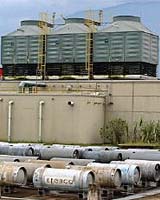
Sao Paulo (UPI) Jun 28, 2005 Brazil has yet to decide whether it will export uranium to China, or build more nuclear reactors despite recent reports in the Brazilian and international media. Both decisions are to be resolved soon when Brazil releases a yearlong comprehensive report, the work of six ministries, which contains a revision of its nuclear program and plans for the future. That report, known as the Brazilian Nuclear Program, has been in the works since May 2004, after President Luis Inacio Lula da Silva's visit to China in 2004. This time a report in Estado de Sao Paulo suggests Brazil made a commitment to a new and ambitious nuclear program, but according to a high official in Brazil's nuclear program, no final decisions have been reached on the proposed report, which has not yet been presented to, nor adopted by, Lula. Although one of the scenarios envisioned by the new plan calls for building as many as seven new reactors, that is just one of many scenarios envisioned by the report, according to Odair Goncalves, president of Brazil's Atomic Energy Commission. "The proposed plan is still being debated within the executive office of the president and within the affected ministries," he said, noting export of uranium is prohibited under Brazil's existing laws. Brazil does face an imminent decision, however, on whether it will proceed with construction of its third nuclear reactor, Angra III. Jose Dirceu, Lula's Chief of Staff, who favored proceeding with the project, recently had to quit over a financial scandal and his replacement is against building Angra III. "Angra III can be resolved without approving the recommended new Brazilian nuclear program," Goncalves said. "However, if the Brazilian Nuclear Program is approved in the manner we have proposed, it certainly it will involve Angra III." He added the new Brazilian nuclear program is more wide-ranging than the decision on Angra III. The Atomic Energy Commission, known as CNEN, controls all nuclear material in Brazil and helps shape nuclear policy. Last year's news reports that Brazil would export enriched uranium to China, along with an earlier incident involving the International Atomic Energy, the U.N. nuclear watchdog, has brought Brazil's nuclear program to the world's attention. Goncalves called those stories inaccurate and misleading. He told United Press International of the actual events: "While we were in China during the president's state visit, the Chinese indicated they wanted very much to import Uranium from us...they didn't much care at that point whether it was enriched or not. "They're going to need a lot of uranium; they're planning to build at least 10 nuclear reactors. In fact they said that they would even come down to Brazil to help us mine for the uranium. "We said that was not permitted by the Brazilian constitution and that Brazil was not considering the export of uranium. Those are the facts. I know because I was there at the negotiating table." What happened next was someone from the highest levels of the Brazilian government (though not the Science and Technology Minister, nor Brazil's President) told reporters "Brazil is closing lots of deals with the Chinese...we are going to export lots of minerals to China ...we are going to export iron ore, soy beans and Uranium." When that got out, it made the front pages of most of the world's newspapers. "So, we had to go out of our way to say, 'no' we're not planning to do this, but all the attention that story generated led our president to ask for an inter-ministerial review of our nation's nuclear program and our plans for the future," Goncalves said. "The president himself wanted to know if we had a plan for the future (for our nuclear program). And so we embarked on this revision of Brazil's nuclear program. The China issue stimulated the revision, because it became evident in various branches of our government, that it was a big strategic and international issue." During a recent interview with UPI, Dirceu, who was Lula's chief of staff at the time, confirmed Brazil was not involved in the international commerce of uranium, but indicated "an eventual reconsideration of that position depends upon the results of the wide-sweeping study of the Brazilian nuclear program which is currently under way." Dirceu also said "a decision on Angra III will be taken by President Lula after an analysis is completed by the Council on National Energy Policy, which includes the participation of my ministry; the ministers of Mines & Energy, the Environment, Science & Technology, Planning, and Industry & Commerce, along with members of Brazil's scientific community." (First of four parts) Related Links SpaceDaily Search SpaceDaily Subscribe To SpaceDaily Express
 IAEA experts to inspect Russian nuclear power station
 Moscow (AFP) Jun 28, 2005
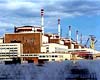
Experts from the International Atomic Energy Agency (IAEA) will inspect Russia's Volgodonsky nuclear power station in October to determine its safety levels, the ITAR-TASS news agency reported. |
|
|

| The content herein, unless otherwise known to be public domain, are Copyright 1995-2006 - SpaceDaily.AFP and UPI Wire Stories are copyright Agence France-Presse and United Press International. ESA PortalReports are copyright European Space Agency. All NASA sourced material is public domain. Additionalcopyrights may apply in whole or part to other bona fide parties. Advertising does not imply endorsement,agreement or approval of any opinions, statements or information provided by SpaceDaily on any Web page published or hosted by SpaceDaily. Privacy Statement |