| . |  |
. |
| . | |
. |


 by Staff Writers Washington DC (SPX) Nov 07, 2016
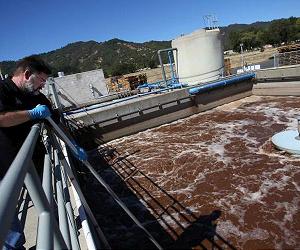
Nations that pledged to carry out the Paris climate agreement have moved forward to find practical ways to reduce greenhouse gas emissions, including efforts to ban hydrofluorocarbons and set stricter fuel-efficiency standards. Now scientists report in the ACS journal Environmental Science and Technology that one source of carbon dioxide, a primary greenhouse gas, has been overlooked: wastewater treatment plants. Based on their findings, they recommend actions that could curb emissions from this source. Linda Y. Tseng, currently at Colgate University, Diego Rosso, and colleagues from the University of California, Irvine, note that when the Intergovernmental Panel on Climate Change (IPCC) estimated global carbon dioxide (CO2) emissions, the data available to the organization did not include CO2 emission estimates from wastewater, which may contain fossil sources of carbon such as petrochemicals. Although it does take into account greenhouse gases methane and nitrous oxide, the IPCC model assumes that wastewater largely contains and releases carbon from non-petroleum sources - for example, human waste. However, studies have shown that relevant amounts of petroleum products, such as synthetic chemicals from detergents, wash into wastewater and can eventually add to total greenhouse gas emissions. The team investigated the fossil-related carbon content of municipal and industrial wastewaters at various points in the treatment process. Including this carbon from treatment plants could increase estimates of their total greenhouse gas emissions by 12 to 23 percent over previous estimates that only included methane and nitrous oxide. However, the researchers found that treating wastewater sludge could offer an opportunity to reduce the fossil carbon emissions from treatment plants. They note that on-site carbon sequestration run on renewable energy could also lower these plants' impact.

Related Links American Chemical Society Carbon Worlds - where graphite, diamond, amorphous, fullerenes meet
|
|||||||||||||
| The content herein, unless otherwise known to be public domain, are Copyright 1995-2026 - SpaceDaily. All websites are published in Australia and are solely subject to Australian law and governed by Fair Use principals for news reporting and research purposes. By using our websites you consent to cookie based advertising. If you do not agree with this then you must stop using the websites from May 25, 2018. Privacy Statement. Additional information can be found here at About Us. |

 del.icio.us
 Digg
Digg Reddit
 Google