| . |  |
. |
| . | |
. |


Alternative Farming Cleans Up Water
Madison WI (SPX) Jul 20, 2007 Although the addition of nutrients to soil helps to maximize crop production, fertilizer can leach nutrients, polluting the water supply. A recent study by researchers at the University of Minnesota shows alternative cropping practices may help to protect the environment by reducing high nitrate levels in surface and ground water caused by conventional fertilizer use. The team of scientists reports their findings in the July-August 2007 issue of the Journal of Environmental Quality. Nitrogen is one of the most important elements required in agricultural systems for plant and animal production. While treatment with the correct amount of nitrogen-based fertilizer optimizes crop yield and minimizes environmental damage, too much nitrogen can lead to nitrate loss. Nitrate, a mobile form of nitrogen, escapes via water that percolates through soils. In regions where subsurface drainage is used to promote crop growth, high levels of nitrates are transported to downstream waters. Nitrate contamination of water can contribute to waters becoming hypoxic and stress aquatic life living downstream. "The challenge facing industry, farmers, agricultural advisors, and others concerned about the environment is to develop efficient cropping systems that maintain economical production levels while minimizing surface and ground water degradation," said Jeff Strock, lead author of the study. In search of ways to reduce agricultural pollution, Strock and others measured tile drainage and nitrate losses under conventional and alternative cropping systems over a three-year period in southwest Minnesota. This study was funded by the USDA-CSREES-National Integrated Water Quality Program. Researchers categorized conventional farming practices as corn-soybean rotations with inorganic fertilizer application and pesticide usage. Alternative farming practices included organic management practices that incorporated rotation of a variety of crops including corn, soybean, oat, alfalfa, buckwheat, and rye with nutrients supplied from legumes and either fresh or composted manure sources. The study found that alternative cropping systems reduced the amount of water lost in tile drainage by 41 percent compared to a conventional corn-soybean rotation. Alternative farming practices also reduced nitrate-nitrogen losses by between 59 and 62 percent in two out of three years. "Our data suggests that water quantity and quality could be improved by increasing cropping system biodiversity," said Strock. Whether in conventional or organic cropping systems, Strock suggests cropping system biodiversity may be adopted as one of several practices to build a sustainable farm management system that is productive, profitable, and environmentally acceptable. "There are no silver bullets for solving our water quality problems," said Strock. "Instead, implementing practices such as cropping system biodiversity, along with refined nitrogen management practices, growing perennial crops in a rotation, cover cropping, and other management practices will help prevent nitrate contamination of our lakes and rivers." Article abstract at Journal of Environmental Quality Community Email This Article Comment On This Article Related Links American Society of Agronomy (ASA) Water News - Science, Technology and Politics
 Hidden Lake Could Be Key To Helping Darfur
 London (UPI) Jul 20, 2007
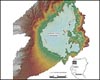
A huge lake hidden beneath Darfur and detected by radar from space could be the key to saving lives in the arid, war-torn region. Plans are under way to dig 1,000 wells that could provide water and help stop the region's war, The Telegraph reported Thursday. A team led by a veteran of NASA's Apollo lunar exploration program used satellite equipment to compose a picture of the 12,000-square-mile "mega-lake" in the western Sudanese province. |
|
|

| The content herein, unless otherwise known to be public domain, are Copyright 1995-2007 - SpaceDaily.AFP and UPI Wire Stories are copyright Agence France-Presse and United Press International. ESA Portal Reports are copyright European Space Agency. All NASA sourced material is public domain. Additional copyrights may apply in whole or part to other bona fide parties. Advertising does not imply endorsement,agreement or approval of any opinions, statements or information provided by SpaceDaily on any Web page published or hosted by SpaceDaily. Privacy Statement |