| . |  |
. |
| . | |
. |


 by Staff Writers Kalianda, Indonesia (AFP) Dec 28, 2018
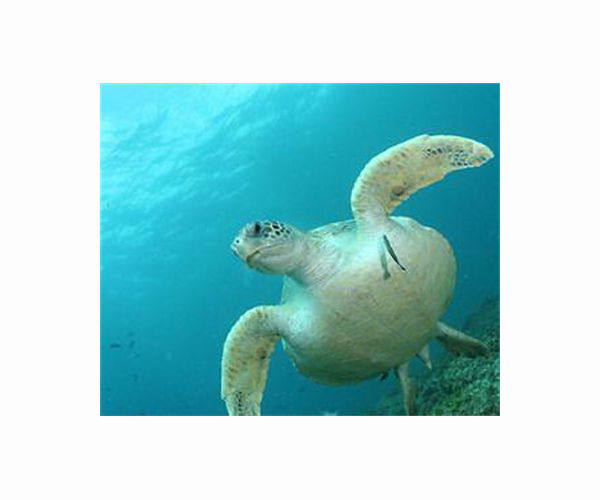
Searching a debris-strewn beach for victims of Indonesia's deadly tsunami, a rescue team happened upon a giant sea turtle trapped in a pile of marine trash. It took four staff to haul the endangered creature back to sea, just the latest in a string of turtle rescues along the country's devastated coast. "The turtle was really large and it got stuck in a pile of rubbish, lying almost upside down," Adi Ayangsyah, a member of a search and rescue team in hard-hit Lampung on Sumatra island, told AFP Friday. He said the turtle was "probably about 30 kilograms (66 pounds)". This week, about 15 other turtles were rescued in the same area. "We think they were swept ashore by the tsunami," said Teguh Ismail, head of Lampung's conservation agency. "But they didn't have any wounds so we got them back in the water." An eruption of the Anak Krakatoa volcano, which sits in the middle of the Sunda Strait between Java and Sumatra islands, caused a section of the crater to collapse and slide into the ocean, triggering the killer tsunami on Saturday evening. On Friday, the death toll stood at 430 with some 159 still missing. Hopes for finding any survivors are all but gone, but the hunt isn't limited to human victims. "We'll keep our eye out for other stranded turtles as well," Ayangsyah said. "For us, all lives matter. Human or animal -- we'll try to rescue them all."
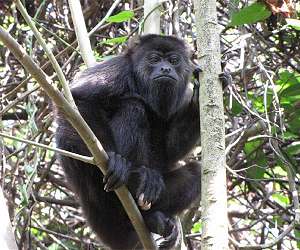
U-M howler monkey study examines mechanisms of new species formation Ann Arbor MI (SPX) Dec 27, 2018 A new University of Michigan study of interbreeding between two species of howler monkeys in Mexico is yielding insights into the forces that drive the evolution of new species. How do new species emerge in nature? One common but overly simplified version of the story goes like this: A population of animals or plants becomes geographically isolated - by a river that changes course or a mountain range that rises up, for example - and the two separated groups accumulate genetic differences over time ... read more
|
|||||||||||||
| The content herein, unless otherwise known to be public domain, are Copyright 1995-2026 - SpaceDaily. All websites are published in Australia and are solely subject to Australian law and governed by Fair Use principals for news reporting and research purposes. By using our websites you consent to cookie based advertising. If you do not agree with this then you must stop using the websites from May 25, 2018. Privacy Statement. Additional information can be found here at About Us. |

 del.icio.us
 Digg
Digg Reddit
 Google







