| . |  |
. |
| . | |
. |


Alien Plants Attack Using Resource Conservation As Weapon
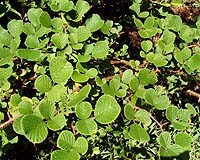
Stanford CA (SPX) May 02, 2007 One of the most serious and least understood threats to the world's ecosystems is the problem of invasive species-exotic plants, animals and other organisms that are brought into habitats and subsequently spread at a rapid rate, often replacing native species and reducing biodiversity. Invaders thrive best in regions where there is an abundance of materials for growth, such as water, nutrients and light. Biologists have long assumed that alien species pose less of a threat in resource-poor environments because they are less able to compete with indigenous plants, which have adapted to their habitats over thousands of years. But a new study by Stanford University researchers finds that invasive plants can flourish in low-resource environments by adopting efficient ways to use available resources. The finding, which sheds new light on how invaders achieve success, may change the way scientists think about invasive species and how to curb them, according the authors of the study published in the April 26 issue of the journal Nature. "What was very intriguing to us is that there are invasive species that are capable of invading low-resource systems," said Jennifer Funk, a postdoctoral fellow in the Stanford Department of Biological Sciences and lead author of the study. "Typically people think low-resource systems aren't invasible. People think of the native plants as having a home-field advantage, because they evolved there." Smart plant growth Plants depend on sunlight, nutrients and water to survive, and a shortage of any one of these will restrict how fast they can grow. When plants use these inputs more efficiently, however, they can photosynthesize-and thus grow and spread-faster, according to Funk and Vitousek. To compare the resource-use efficiencies of alien and native plants, the researchers studied three ecosystems in Hawaii-a forested area with limited light, volcanic soils with low nutrients and a desert. They compared 19 invaders with 19 closely related indigenous plants-for example, an invasive raspberry versus a native raspberry. Using an electronic device that clamped onto the leaves of the plants, the scientists controlled the amount of light reaching the leaf and then measured photosynthesis and water-use rates. Later, they ground up and analyzed the leaves in a laboratory to determine nutrient content. By calculating the ratio of resource use to the rate of photosynthesis, the scientists were able to determine the resource-use efficiency for each plant. "Invasive plants were more efficient on short-time scales, but overall there was no difference in the long term," Funk said. "We were surprised that the invasive plants were not at a disadvantage under conditions where resources were scarce." Knowing your foe These results have important implications for controlling invasive species, said Chris Field, professor of biological sciences at Stanford and director of the Carnegie Institution's Department of Global Ecology. "If you want to manage an invasive, you need to know what the characteristics of the invasives are and target your strategy to those characteristics," he said. Funk pointed to recent experiments that tried to eliminate invaders by deliberately reducing available resources-for example, by mixing sugar into the soil to lock up nutrients or by blocking sunlight with tarps. But these experiments had relatively limited success. "Our results can maybe explain why that method didn't work for all the invasive species," Funk said. Current techniques for fighting invasive species typically involve early detection followed by a variety of removal methods, such as weed-whacking or introducing natural predators of the invasive plants, said study co-author Peter Vitousek, professor of biological sciences at Stanford. To determine which species warrant action, some government agencies in several countries, including the U.S. National Park Service, maintain comprehensive lists of potential invaders, he said. Scientists look at a variety of factors to assess which plants should be included on the lists, but models for determining which invasive species pose the greatest threat are far from complete, Funk added. "With this new information, we can now take a look at those lists with the thought in mind that we better consider adding species that are really resource efficient," Vitousek said. "And then we can hunt those down." Email This Article
Related Links
 Puzzling Plankton Yield Secrets Of Evolution And Global Photosynthesis
 Walnut Creek CA (SPX) May 02, 2007
The analysis of DNA sequences from tiny green algae have provided new insights into the mystery of how new species of plankton evolve-and further highlights their critical role in managing the global cycling of carbon. These findings, by a group led by the DOE Joint Genome Institute; the Scripps Institution of Oceanography, University of California, San Diego; and the Pierre and Marie Curie University, were published this week in the Proceedings of the National Academy of Sciences (PNAS). |
|
|

| The content herein, unless otherwise known to be public domain, are Copyright 1995-2006 - SpaceDaily.AFP and UPI Wire Stories are copyright Agence France-Presse and United Press International. ESA PortalReports are copyright European Space Agency. All NASA sourced material is public domain. Additionalcopyrights may apply in whole or part to other bona fide parties. Advertising does not imply endorsement,agreement or approval of any opinions, statements or information provided by SpaceDaily on any Web page published or hosted by SpaceDaily. Privacy Statement |