| . |  |
. |
| . | |
. |


Airborne Laser Team Completes Successful Tests of High-Power Laser
Los Angeles - Apr 30, 2002 The Air Force's Airborne Laser (ABL) team successfully completed test-firings of the first flight laser module (LM-1) in March. The firings produced record power levels of 118 percent of the laser's designed power output and exceeded the power requirements of the ABL mission. The ABL system will use six such laser modules to create a megawatt-class chemical laser flying in a specially built Boeing 747-400F to shoot down missiles in the boost phase. The high-power laser is coupled with a revolutionary optical system capable of focusing a basketball-sized spot of heat that can burn through a missile skin from hundreds of miles away. The laser and optical systems are controlled by a sophisticated computer system that can simultaneously track and prioritize potential targets. �We are extremely happy with TRW's work on the laser and with the potential this holds for the nation's missile defense program," said Col. Ellen Pawlikowski, director of the Airborne Laser System Program Office at Kirtland AFB, N.M. The series of laser performance tests, culminating more than a year of integration and testing by TRW, was completed in January at the company's Capistrano Test Site in southern California. TRW is disassembling LM-1 in preparation for delivery to Edwards Air Force Base for integration into ABL's flight system. The company has also begun delivery of the components required for the integration of the remaining five modules needed for the first ABL-equipped 747. "I'm very proud of the technical innovation and collaboration within our team that helped us complete this test program," said Steve Hixson, TRW's ABL program manager. "Not only did the laser exceed performance goals, but our team overcame significant engineering challenges, including demonstration of a new two-stage turbo pump capable of the chemical flow rates required for full-power lasing. The successful tests of LM-1 mark a major step forward in overcoming the technical risk in developing the world's first airborne directed energy weapon system." Development of the ABL demonstrator now shifts to the ABL System Integration Laboratory, a new facility at Edwards Air Force Base, Calif. There the ABL team will assemble the five additional laser modules, integrate them with LM-1, then perform a ground-based demonstration of the integrated high-energy laser that will fly on the first ABL system. The LM-1 test program was conducted as part of Team ABL's Program Development and Risk Reduction contract with the Air Force Space & Missile Systems Center. The Airborne Laser program is managed by the Air Force ABL system program office, Kirtland Air Force Base, N.M., which reports to Aeronautical Systems Center, Wright-Patterson AFB, Ohio. The Department of Defense Missile Defense Agency (MDA) has management authority and funding responsibility for the ABL program. Boeing is leading the team selected by the U.S. Air Force to develop and demonstrate the ABL. Team ABL includes Boeing, Lockheed Martin and TRW, working closely with the Air Force and MDA. Boeing is responsible for developing the ABL surveillance BMC4I, integrating the weapon system and supplying the modified 747-400 Freighter aircraft. TRW is providing the complete chemical oxygen-iodine laser system. Lockheed Martin is developing the beam control/fire control system, which will acquire the target, then accurately point and fire the laser. Related Links Team ABL SpaceDaily Search SpaceDaily Subscribe To SpaceDaily Express
 SkyNet Will Guide Unmanned Vehicles into Battle
 Los Angeles - Apr 24, 2002
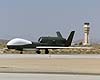
With an increasing number of unmanned vehicles taking up positions on the modern battlefield, UCLA researchers are designing a portable, rapidly deployable network that will allow these robotic agents to communicate. |
|
|

| The content herein, unless otherwise known to be public domain, are Copyright 1995-2006 - SpaceDaily.AFP and UPI Wire Stories are copyright Agence France-Presse and United Press International. ESA PortalReports are copyright European Space Agency. All NASA sourced material is public domain. Additionalcopyrights may apply in whole or part to other bona fide parties. Advertising does not imply endorsement,agreement or approval of any opinions, statements or information provided by SpaceDaily on any Web page published or hosted by SpaceDaily. Privacy Statement |