| . |  |
. |
| . | |
. |


Aggression-Related Gene Weakens Brains Impulse Control Circuits
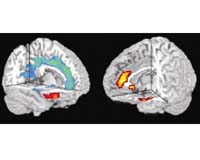
Bethesda MD (SPX) Mar 21, 2006 A version of a gene previously linked to impulsive violence appears to weaken brain circuits that regulate impulses, emotional memory and thinking in humans, researchers at the National Institutes of Health's (NIH) National Institute of Mental Health (NIMH) have found. Brain scans revealed that people with this version � especially males � tended to have relatively smaller emotion-related brain structures, a hyperactive alarm center and under-active impulse control circuitry. The study identifies neural mechanisms by which this gene likely contributes to risk for violent and impulsive behavior through effects on the developing brain. NIMH intramural researchers Andreas Meyer-Lindenberg, M.D., Daniel Weinberger, M.D., Ph.D., and colleagues report on their magnetic resonance imaging (MRI) study online in the Proceedings of the National Academy of Sciences during the week of March 20, 2006. "These new findings illustrate the breathtaking power of 'imaging genomics' to study the brain's workings in a way that helps us to understand the circuitry underlying diversity in human temperament," said NIH Director Elias A. Zerhouni, M.D., who conducted MRI studies earlier in his career. "By itself, this gene is likely to contribute only a small amount of risk in interaction with other genetic and psychosocial influences; it won't make people violent," explained Meyer-Lindenberg. "But by studying its effects in a large sample of normal people, we were able to see how this gene variant biases the brain toward impulsive, aggressive behavior." The gene is one of two common versions that code for the enzyme monoamine oxydase-A (MAO-A), which breaks down key mood-regulating chemical messengers, most notably serotonin. The previously identified violence-related, or L, version, contains a different number of repeating sequences in its genetic code than the other version (H), likely resulting in lower enzyme activity and hence higher levels of serotonin. These, in turn, influence how the brain gets wired during development. The variations may have more impact on males because they have only one copy of this X-chromosomal gene, while females have two copies, one of which will be of the H variant in most cases. Several previous studies had linked increased serotonin during development with violence and the L version of MAO-A. For example, a 2002 study* by NIMH-funded researchers discovered that the gene's effects depend on interactions with environmental hard knocks: men with L were more prone to impulsive violence, but only if they were abused as children. Meyer-Lindenberg and colleagues set out to discover how this works at the level of brain circuitry. Using structural MRI in 97 subjects, they found that those with L showed reductions in gray matter (neurons and their connections) of about 8 percent in brain structures of a mood-regulating circuit (cingulate cortex, amygdala) among other areas. Volume of an area important for motivation and impulse regulation (orbital frontal cortex) was increased by 14 percent in men only. Although the reasons are unknown, this could reflect deficient pruning � the withering of unused neuronal connections as the brain matures and becomes more efficient, speculates Meyer-Lindenberg. The researchers then looked at effects on brain activity using functional MRI (fMRI) scans. While performing a task matching emotionally evocative pictures � angry and fearful faces � subjects with L showed higher activity in the fear hub (amygdala). At the same time, decreased activity was observed in higher brain areas that regulate the fear hub (cingulate, orbital frontal, and insular cortices) � essentially the same circuit that was changed in volume. While these changes were found in both men and women, two other experiments revealed gene-related changes in men only. In a task which required remembering emotionally negative information, men, but not women, with L had increased reactivity in the fear (amygdala) and memory (hippocampus) hubs. Men with L were also deficient during a task requiring them to inhibit a simple motor response; they failed to activate a part of the brain (cingulate cortex) important for inhibiting such behavioral impulses. This region was, conspicuously, the cortex area that was most reduced in volume. The findings echo those of a 2005 NIMH study** showing how another serotonin-related gene variant shapes the same mood-regulating circuit. In this study also, the gene version that boosts serotonin levels resulted in impaired emotion-related lower brain structures, increased fear hub activation and a weaker response of its regulatory circuits. Yet, the effects of the L version of MAO-A were more extensive, perhaps reflecting the fact that it also impacts another key mood-regulating neurotransmitter, norepinephrine. The weakened regulatory circuits in men with L are compounded by intrinsically weaker connections between the orbital frontal cortex and amygdala in all men, say the researchers. "Heightened sensitivity in brain circuits important to cognitive inhibition and memory for negative emotional information may contribute to increased vulnerability of men with L exposed to abuse during childhood," suggested Weinberger. "Since only men showed gene effects in several of these circuits, this could lead to a situation where multiple brain control mechanisms are impaired and contribute to manifestly violent behavior, a kind of genetic double jeopardy." Related Links National Institute of Mental Health
 Aging Japan Building Robots To Look After Elderly
 Tokyo (AFP) Mar 15, 2006
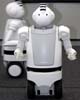
A Japanese-led research team Tuesday said it had made a seeing, hearing and smelling robot that can carry human beings and is aimed at helping care for the country's growing number of elderly. |
|
|

| The content herein, unless otherwise known to be public domain, are Copyright 1995-2006 - SpaceDaily.AFP and UPI Wire Stories are copyright Agence France-Presse and United Press International. ESA PortalReports are copyright European Space Agency. All NASA sourced material is public domain. Additionalcopyrights may apply in whole or part to other bona fide parties. Advertising does not imply endorsement,agreement or approval of any opinions, statements or information provided by SpaceDaily on any Web page published or hosted by SpaceDaily. Privacy Statement |