. 24/7 Space News .
EPIDEMICS
Aerial pesticide 'key driver' of Zika's end in Miami: US
By Kerry SHERIDAN
Miami (AFP) Sept 23, 2016


Invasive species may reduce the spread of disease
Ann Arbor, Mich. (UPI) Sep 22, 2016 - Invasive species may not be all bad. New research suggests the introduction of non-native species can reduce the spread of disease.

Initially, scientists were interested to find out how invasive species affect parasite populations in a given ecosystem. To find out, researchers analyzed the effects of an invasive water flea from Africa, Daphnia lumholtzi, on the native water flea species Daphnia dentifera.

Experiments showed the invasive species became more easily infected by the fungal parasite the two water flea species share. The discovery suggested the introduction of an invasive species would spread parasites and accompanying diseases more readily.

To test their hypothesis in the lab, researchers created a series of miniature ponds in buckets. Scientists populated each bucket with different combinations of native and invasive water fleas.

To their surprise, the researchers found buckets with fewer or no invasive water fleas featured increased disease concentrations. More invasive water fleas yielded less diseased environs.

Researchers built a mathematical model to help them understand what was going in. The simulation suggests the invasive water fleas drive down total water flea population by competing for resources. With fewer hosts, the fungal disease was less able to propagate.

Researchers published the new findings in the journal The American Naturalist.

The findings are forcing ecologists and infectious diseases scientists to rethink how they account for invasive species.

"Scientists must take into account the ecological characteristics of invasive species, including the ways in which the invasive species affect the number of other organisms in a community," researchers explained in a University of Michigan news release.

The use of a controversial pesticide, sprayed from overhead on a Miami neighborhood, was a "key driver" in ending the local spread of the Zika virus there, US health officials said Friday.

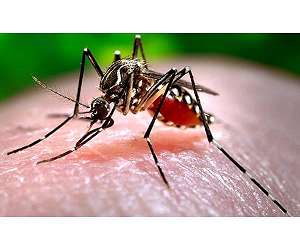
Aerial spraying with naled, which is banned in the European Union, and with a larvicide called Bti provided a "one-two punch" that helped wipe out Aedes aegypti mosquitoes in the Wynwood neighborhood of Miami, said Tom Frieden, chief of the US Centers for Disease Control and Prevention.

Wynwood was ground zero for the first US outbreak of locally transmitted Zika, a virus which can cause birth defects and has spread rapidly through Latin America and the Caribbean.

From June 30 to August 5, 2016, there were 29 people with Zika virus infection who were likely exposed within about six blocks of the hipster art district north of downtown Miami.

Ground-based applications of pesticide showed little effectiveness, and mosquito counts stayed high, raising concern that they might be difficult to kill.

But aerial spraying led to a "rapid dropoff in the mosquito count," Frieden said, describing the data as "really quite striking."

"At this point, aerial application appears to be our strongest tool," Frieden told reporters on a conference call.

"Aerial spraying appears to be a -- if not the -- key driver in this progress."

- Short-term health unharmed -

A complete report on the situation was released in the CDC Morbidity and Mortality Weekly Report.

"No increases in short-term health effects were associated with spraying," it said.

Calls to poison centers did not increase, nor did visits to emergency rooms compared with time periods before the spraying occurred.

The Zika outbreak is not over in Florida. Miami Beach continues to experience local spread of Zika, and aerial spraying has begun there, too.

The mainland United States has so far counted more than 3,300 travel-associated cases, meaning they involve people who were infected elsewhere.

Zika can be spread by the bite of an infected mosquito or by sexual contact.

Florida is so far the only US state with local transmission, and has 95 such cases and more than 680 travel-related infections. A total of 90 pregnant women in Florida have been diagnosed with Zika.

The virus is linked to the birth defect microcephaly, which causes newborns' heads to be abnormally small, and rare adult-onset neurological problems like Guillain-Barre Syndrome.

The US territory of Puerto Rico, which has seen more than 19,000 cases of Zika, recently decided not to pursue aerial spraying, Frieden said.

- Controversial tool -

Naled has been used in the United States since 1959 as a common tool for mosquito control, despite concerns about its risks for human and environmental health.

The European Union prohibited its use in 2012, but the US Environmental Protection Agency assures it is safe if sprayed sparingly.

Some Miami residents have protested the use of naled, citing concerns for human and animal health.

Reports also surfaced earlier this month in South Carolina that millions of bees were killed after an aerial spraying of naled, following the confirmation of four Zika cases there.

Frieden said he understood concerns about the potential risks, but said that officials used an "ultralow volume" of less than one ounce per acre, and sprayed early in the morning to minimize exposure to people and bees.

Since there is no vaccine to prevent Zika, the evidence that aerial spraying could work was a boon to public health efforts.

Such an approach "has never before been proven to stop the spread of human disease," Frieden said.

"This really does herald a new era for control of local transmission."


Thanks for being here;
We need your help. The SpaceDaily news network continues to grow but revenues have never been harder to maintain.

With the rise of Ad Blockers, and Facebook - our traditional revenue sources via quality network advertising continues to decline. And unlike so many other news sites, we don't have a paywall - with those annoying usernames and passwords.

Our news coverage takes time and effort to publish 365 days a year.

If you find our news sites informative and useful then please consider becoming a regular supporter or for now make a one off contribution.
SpaceDaily Contributor
$5 Billed Once


credit card or paypal
SpaceDaily Monthly Supporter
$5 Billed Monthly


paypal only


.


Related Links
Epidemics on Earth - Bird Flu, HIV/AIDS, Ebola


Comment on this article via your Facebook, Yahoo, AOL, Hotmail login.

Share this article via these popular social media networks
del.icio.usdel.icio.us DiggDigg RedditReddit GoogleGoogle

Previous Report
EPIDEMICS
UN mobilizes to stop super-bugs
United Nations, United States (AFP) Sept 21, 2016
The United Nations on Wednesday launched a global effort to fight so-called super-bugs that resist antibiotics, warning of a mounting death toll without more research. "Some scientists call it a slow-motion tsunami," Margaret Chan, director-general of the World Health Organization, told a first-of-a-kind UN meeting on the problem. "The situation is bad and getting worse," she said. G ... read more


EPIDEMICS
Exploration Team Shoots for the Moon with Water-Propelled Satellite

Space tourists eye $150mln Soyuz lunar flyby

Roscosmos to spend $7.5Mln studying issues of manned lunar missions

Lockheed Martin, NASA Ink Deal for SkyFire Infrared Lunar Discovery Satellite

EPIDEMICS
A Mixed-reality Trip to Mars

Mars 2020 rover to produce oxygen: NASA

Opportunity Heads Toward First Waypoint of its Next Extended Mission

Mars hosted lakes, snowmelt-fed streams much later than previously thought

EPIDEMICS
Taiwan's summer slump as Chinese visitors stay away

Entropy

Goddard space center mission-critical for ISS astronauts

NASA's black female mathematicians hit the big screen

EPIDEMICS
Tiangong 2 initial tests proceeding well

China's space lab Tiangong-2 enters in-orbit test track

China's Tiangong-1 space station to crash into Earth in 2017

Tiangong-2 "another significant step" for building China's space station

EPIDEMICS
Manned launch of Soyuz MS-02 maybe postponed to Nov 1

Russia cancels manned space launch over 'technical' issues

US astronauts complete spacewalk for ISS maintenance

Space Station's orbit adjusted Wednesday

EPIDEMICS
Rocket agreement marks countdown to New Zealand's first space launch

Parallel launch preparations put Ariane 5 on track for next launch

Vega orbits "eyes in the skies" on its latest success

Russia postpones Soyuz MS-02 ISS launch due to electrical glitch

EPIDEMICS
Stellar activity can mimic misaligned exoplanets

ALMA locates possible birth site of icy giant planet

New light on the complex nature of 'hot Jupiter' atmospheres

Discovery one-ups Tatooine, finds twin stars hosting three giant exoplanets

EPIDEMICS
Tardigrades use protective protein to shield their DNA from radiation

'Virtual orchestra' hits high notes in London

Study investigates steel-eating microbes on ship hulls

Beyond plastic: Design world goes green and 'meaningful'


The content herein, unless otherwise known to be public domain, are Copyright 1995-2026 - SpaceDaily. All websites are published in Australia and are solely subject to Australian law and governed by Fair Use principals for news reporting and research purposes. By using our websites you consent to cookie based advertising. If you do not agree with this then you must stop using the websites from May 25, 2018. Privacy Statement. Additional information can be found here at About Us.