| . |  |
. |
| . | |
. |


 By Jean-Louis SANTINI Boston (AFP) Feb 17, 2017
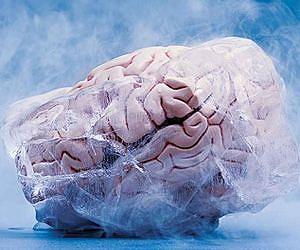
New imaging techniques enable exploration of the brain in much more detail than ever before, opening the door to greater understanding of neurological problems and possibly new treatments, researchers say. Showcased this week at the American Association for the Advancement of Science annual meeting, the research and innovations are the product of three US scientists involved in a project launched by former president Barack Obama in 2013 to unlock the inner workings of the brain. Obama's Brain Research through Advancing Innovative Neurotechnologies (BRAIN) initiative promised a multidisciplinary approach, with a budget of $434 million for 2017, aimed at unlocking the mysteries of the brain and treating diseases such as Alzheimer's, Parkinson's and schizophrenia. One of the technologies developed as part of the initiative, called Scape, enables scientists to see brain structures at a microscopic level. Scape permits the three-dimensional observation of individual neurons in the brain of a fruit fly as the insect is in flight, searching for food or suddenly afraid for its life, said Elisabeth Hillman, professor of biomedical engineering at Columbia University. "You can see actually flashing green as the brain is telling the body to move," she told the conference. "We can image every single neuron in the entire brain of these organisms, which was never possible to do before." The new tool opens up multiple paths for research, including deciphering the signals currently seen in magnetic resonance imagery (MRI). "We are hoping to leverage this new technique to better understand diseases," she said. - Portable MRI - Another new technology, the recently patented portable MRI, also promises advances for mobile diagnosis, said Julie Brefczynski-Lewis, assistant professor of research at West Virginia University. The size of an American football helmet, the advanced, miniature technology is worn on the head and does not interfere with patients' ability to move freely. The new device can peer deeply into the brain's structures as opposed to older MRI scans, which only scan the brain's surface. "A lot of important things that are going on with emotion, memory, behavior are way deep in the center of the brain... areas we can reach with our technology," Brefczynski-Lewis said. "So you can get the instructions in the brain that are important for walking, for balance and eventually we will be covering the entire brain from top to bottom," she added. The device can be used for scanning patients suffering strokes, epilepsy, or from injuries sustained during accidents or on the battlefield. "With this technique, you can study someone in the ER (emergency room) with a stroke and find out different treatment options that may be more appropriate," Brefczynski-Lewis said. "It is personal medicine." - Remotely firing neurons - Another area of brain exploration involves a technology that can remotely activate or fire neurons from a distance using radio waves or magnetic fields. "The idea is to be non-invasive," said Sarah Stanley, assistant professor of medicine at the Icahn School of medicine at Mount Sinai in New York. "We don't want to interfere with the behavior of the organism we are studying." Activating neurons in precise locations of the brain could help researchers discover new treatments by showing which cells are involved in which illnesses. The technology could also be used to improve the targeting of deep-brain stimulation by electrical impulses, currently used to minimize symptoms of Parkinson's disease. "This method could help in the discovery of drugs, what kind of cell type is involved in a disease and help cure the diseases," Stanley said.

Related Links All About Human Beings and How We Got To Be Here
|
|||||||||||||
| The content herein, unless otherwise known to be public domain, are Copyright 1995-2026 - SpaceDaily. All websites are published in Australia and are solely subject to Australian law and governed by Fair Use principals for news reporting and research purposes. By using our websites you consent to cookie based advertising. If you do not agree with this then you must stop using the websites from May 25, 2018. Privacy Statement. Additional information can be found here at About Us. |

 del.icio.us
 Digg
Digg Reddit
 Google