| . |  |
. |
| . | |
. |


 by Staff Writers Bethesda MD (SPX) Mar 22, 2019
There is only one country that is close to achieving 100% renewable energy production (for production of electricity). Costa Rica operated 311 consecutive days in 2018 on renewables driven primarily by hydroelectric power production (75%), followed by geothermal power production (15%), then wind power production (5%), solar power production (4%), and a very small sector of biomass power production (less than 1%). Over 99% of Costa Rica's electric power is derived from these five renewable energy sources (by comparison, renewable sources generate about 17% of electricity in the United States). The country has a geographic advantage over others because of a high concentration per capita of rivers, dams, and volcanoes allowing for a high renewable energy output. The total population of 5 million Costa Ricans live in a country about the size of West Virginia. In the northwest Guanacaste region of Costa Rica, the terrain is mountainous and filled with tropical rainforests, rivers and lakes. The Miravalles Geothermal Power Plant is built on one of five active volcanoes in the country. A group of electrical contractors sponsored by ELECTRI International recently toured the plant (March 15, 2019). Standing on the outer rim of the volcano, we saw the large geothermal power plant, flanked by a solar panel farm, a windmill farm along the ridge of the mountains westward toward the Pacific Ocean, and to the south and east a hydroelectric dam. From one distribution point (where we stood) these four sources of renewable power generate electricity for over 250,000 homes in the region. There is not another place on earth a person can stand and see 4 sources of renewable power converge to distribute electricity to power the needs of any community or region. As Costa Rica looks to convert transportation to renewables energy sources, electrical contractors or systems integrators, will design, build and maintain these renewable, clean power sources.
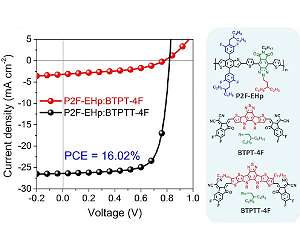
New record: Over 16 percent efficiency for single-junction organic solar cells Beijing, China (SPX) Mar 19, 2019 As a promising technology for renewable energy, organic solar cells (OSCs) have attracted particular interest from both industrial and academic communities. One of the main challenges to promote practical applications of OSCs is their less competitive power conversion efficiency than that of the counterpart photovoltaic technologies such as inorganic silicon, CIGS, or perovskite solar cells. The photovoltaic performance of bulk-heterojunction OSCs is determined by open-circuit voltage, short-circu ... read more
|
|||||||||||||
| The content herein, unless otherwise known to be public domain, are Copyright 1995-2026 - SpaceDaily. All websites are published in Australia and are solely subject to Australian law and governed by Fair Use principals for news reporting and research purposes. By using our websites you consent to cookie based advertising. If you do not agree with this then you must stop using the websites from May 25, 2018. Privacy Statement. Additional information can be found here at About Us. |


 del.icio.us
 Digg
Digg Reddit
 Google







