| . |  |
. |
| . | |
. |


 by Staff Writers Basel, Switzerland (SPX) Feb 01, 2019
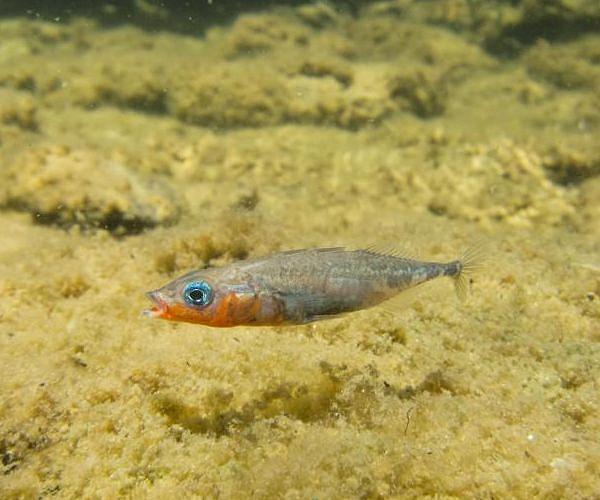
Genetic analysis of sticklebacks shows that isolated populations in similar environments develop in comparable ways. The basis for this is already present in the genome of their genetic ancestors. Evolutionary biologists from the University of Basel and the University of Nottingham report these insights in the journal Evolution Letters. Many examples can be found in nature of evolution producing the same characteristics repeatedly and independently. Similar adaptations to similar environmental conditions have been documented in numerous animal and plant species, even if primarily on the level of external characteristics. The extent to which similar populations have also made use of the same genetic variants during their evolution, however, is little known. A new study has now provided new insights into the genetic basis of such parallel evolution. To this end, researchers from the University of Basel and the University of Nottingham examined the genome of threespine sticklebacks. This is a popular fish among evolutionary biologists because it has adapted to a variety of habitats. In addition to this, the shared ancestor of freshwater populations - sticklebacks that originally lived in the ocean - still exists today, which enables an examination of the initial genetic base.
Isolated populations develop the same characteristics Studies of five populations from both the western and eastern lakes showed that the fish adapted to their alkaline or acidic habitat independently of each other, but in comparable ways. All five populations in the acidic lakes, for example, displayed a greatly reduced skeleton and stunted growth - probably as an adaptation to the lack of nutrients.
Variants located in the genome of ancestors This makes it possible to predict where in the genome changes will take place under the influence of a particular habitat - evolution becomes predictable to some extent. Genetic analysis of the marine ancestor also showed that the genetic variants that are beneficial for adapting to acidic or alkaline water are all present in the ancestor. Similar life forms, therefore, didn't occur randomly, but independently of each other through the predictable sorting of advantageous genetic variants that were already present in the genome.
Ivory and pangolin scales smuggling bust in Uganda Kampala (AFP) Jan 31, 2019 More than 700 pieces of ivory and hundreds of pangolin scales have been discovered inside hollowed out logs in the Ugandan capital Kamapala, authorities said on Thursday, as two Vietnamese men were detained suspected of smuggling. The illegal cargo was discovered after officers at the Ugandan tax authority (URA) scanned three 20-foot (six-metre) containers carrying timber logs which had crossed the border from South Sudan. After growing suspicious, a team secretly tailed the cargo to a warehouse ... read more
|
|||||||||||||
| The content herein, unless otherwise known to be public domain, are Copyright 1995-2026 - SpaceDaily. All websites are published in Australia and are solely subject to Australian law and governed by Fair Use principals for news reporting and research purposes. By using our websites you consent to cookie based advertising. If you do not agree with this then you must stop using the websites from May 25, 2018. Privacy Statement. Additional information can be found here at About Us. |

 del.icio.us
 Digg
Digg Reddit
 Google







