| . |  |
. |
| . | |
. |


 by Staff Writers Fort Collins CO (SPX) Jun 05, 2017
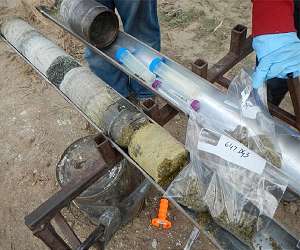
Uranium, the radioactive element that fuels nuclear power plants and occurs naturally in the Earth's crust, is typically mined from large sandstone deposits deep underground. The uranium in these deposits, which are called roll fronts, has long been thought to form over millions of years via chemical reactions of sulfur and other non-biological compounds. This widely accepted textbook geology is being challenged by Colorado State University biogeochemists in a new study published June 1 in Nature Communications. Thomas Borch, professor of soil and crop sciences with joint appointments in chemistry and civil and environmental engineering, and Amrita Bhattacharyya, a former postdoctoral researcher in Borch's lab, offer evidence for a new origin story for the uranium trapped underground in roll fronts. Bhattacharyya is the paper's first author, and is now a research fellow at Lawrence Berkeley National Laboratory. "You know you might have a big story when you discover something that will result in people having to rewrite textbooks," Borch said. "Our results may introduce a paradigm shift in the way we think about ore genesis and mining - from implications for human health, to restoration practices, to how mining companies calculate how much they can earn from a given site." Conventional wisdom has told us that uranium within ore deposits is mostly found in the form of uraninite, a crystalline mineral. In recent years, scientists had uncovered new evidence that bacteria - living microorganisms - could generate a different kind of reduced uranium that is non-crystalline and has very different physical and chemical properties. Borch, working on an unrelated experiment studying the composition of uranium at mined and unmined sites in Wyoming, surmised that this biogenic (of biological origin), non-crystalline uranium might occur naturally within ore deposits. To find out, Borch's team analyzed samples from the Wyoming roll front, using new techniques including synchrotron radiation-based spectroscopy and isotope fingerprinting. They found that up to 89 percent of the uranium from their 650-foot-deep samples wasn't crystalline uraninite at all, but rather, a non-crystalline uranium that was bound to organic matter or inorganic carbonate. Most of the uranium they found in that unmined site is estimated to be 3 million years old, and formed via reduction by microorganisms - microbes that respire not on oxygen, but on uranium. To verify their results, the team partnered with experts from the U.S. Geological Survey, Institute for Mineralogy at Leibniz University in Germany, and the Swiss Federal Institute of Technology in Lausanne, all of whom became paper co-authors. Abundance of this biogenic non-crystalline uranium has implications for environmental remediation of mining sites, and for mining practices in general. For instance, biogenic non-crystalline uranium is much more likely to oxidize into a water-soluble form than its crystalline counterparts. This could impact the compound's environmental mobility and its likelihood for contaminating a drinking water aquifer, Borch said. Borch says that most states require spent mines to be restored to pre-mining conditions. "In order to get back to pre-mining conditions, we had better understand those pre-mining conditions," Borch said. "The baseline may not be what we thought it was." Though there is now strong evidence for microbial origins of roll-front uranium, what's less clear is whether the microbes making uranium today are the same as those that formed it in the Earth's crust 3 million years ago. "But we do know through isotopic fingerprinting that the uranium formed via microbial reduction," Borch said. Borch's co-authors include Rizlan Bernier-Latmani, a scientist in Switzerland who developed the isotopic fingerprinting techniques to differentiate between uranium formed via microbial or chemical means. Borch and colleagues hope to explore the origins of roll-front uranium deposits at other sites, in order to evaluate the global significance of their findings.
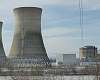 Three Mile Island nuclear plant to close in 2019
Washington (UPI) May 30, 2017 The Three Mile Island atomic power plant - site of the worst U.S. commercial nuclear accident in 1979 - will cease operations in 2019, owner Exelon Corp. announced Tuesday. The plant, based in Middletown, Pa., and about 90 miles west of Philadelphia, has lost $300 million over the past five years because of the decline in energy prices, Chicago-based Exelon said in a filing with the S ... read more Related Links Colorado State University Nuclear Power News - Nuclear Science, Nuclear Technology Powering The World in the 21st Century at Energy-Daily.com

|
|||||||||||||
| The content herein, unless otherwise known to be public domain, are Copyright 1995-2026 - SpaceDaily. All websites are published in Australia and are solely subject to Australian law and governed by Fair Use principals for news reporting and research purposes. By using our websites you consent to cookie based advertising. If you do not agree with this then you must stop using the websites from May 25, 2018. Privacy Statement. Additional information can be found here at About Us. |

 del.icio.us
 Digg
Digg Reddit
 Google






