| . |  |
. |
| . | |
. |


 by Staff Writers Davis CA (SPX) Mar 26, 2018
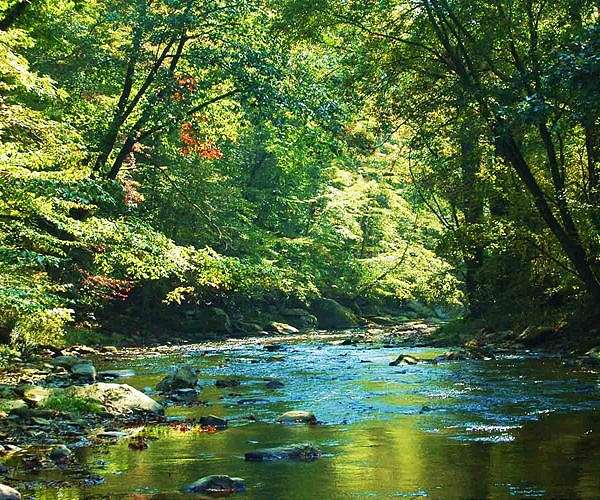
A small restored area is having a big impact on regional birds, fish and animals, according to a study published in the journal Ecological Restoration by the University of California, Davis. Just 4 miles west of UC Davis' main campus sits a sliver of wildness called Putah Creek Riparian Reserve. On a recent spring day, below a canopy of valley oaks and eucalyptus trees came a twittering of chirps, trills and quacks. Two kingfishers crisscrossed the creek, calling to each other. Woodpeckers drilled into tree bark. A house wren assertively defended his nest box from any real estate competitors. In the distance, a train whistle blew, and an airplane took off - reminders of the urban world just up the road. About 20 years ago, this gem of a green oasis was largely a dry ditch, more likely to be used as a dumping ground for rusty car parts and washing machines than a haven for wildlife or humans. Then in 2000, a lawsuit brought about the Putah Creek Accord, which mandated year-round flows for the creek to help protect fish and habitat. When the water returned, so did the bugs, the fish and the birds. A lot of birds. "Since 1999, the year before the water returned, the density of the breeding birds on lower Putah Creek has more than doubled," said lead author Kristen Dybala, a postdoctoral scholar at UC Davis during the time of the study and now a senior research ecologist with nonprofit Point Blue Conservation Science. "That's just kind of incredible to me." For the study, researchers analyzed about 14 years of bird survey data collected along a 23-mile area of the creek. It found that the average density of birds increased from roughly 30 birds per acre in 1999 to 84 birds per acre in 2012.
Riparian Birds Return The researchers also found that the increase could not be explained by other regional factors or just by the addition of nest boxes along the creek. "These are benefits specifically to riparian birds, which depend on this streamside habitat and have been less common along Putah Creek," Dybala said. "Some of them nest on the ground; some require tree cavities; some require shrubs. If you're looking at this whole group and they're all improving, then you have a better idea that the entire ecosystem is functioning well."
Beyond The Water's Edge "The insects are an amazing food source around the creek," said this study's senior author Melanie Truan, a staff research associate with the UC Davis Museum of Wildlife and Fish Biology. "It's the pulse of this insect life living along the creek - if you improve the instream environment, you improve it for both aquatic and terrestrial life."
A Model For Neglected Streams Beyond the return of fish and birds, biologists conducting the survey have observed a host of other wildlife returning to the creek, from mink and beaver to river otters, bobcats, coyotes, and even an occasional bear. The potential for groundwater recharge, carbon sequestration, erosion and flood control, improved water quality, and a revived community greenspace benefits humans, as well. "Putah Creek is this little relic of what used to be in the valley. It's kind of amazing that it's still there. If it hadn't been for the people who fought to protect the water in it, it would just be a ditch," said Truan, noting the influence of the Putah Creek Council and its volunteers on its restoration. "When you step down into the reserve, you feel like you're in a whole different world. It really is a singularly unique place that engenders a lot of really wonderful feelings."
Room For Improvement Cooler water entering the stream warms as it moves downstream, resulting in more invasive fish in those areas. More work is needed to connect existing patches of habitat together so that downstream sites can enjoy the same benefits to wildlife as the upstream sites.
Less-frequent lawn mowing may help suburban bees Amherst MA (SPX) Mar 19, 2018 Homeowners concerned about the decline of bees, butterflies and other pollinating insects need look no further than their own back yards, says ecologist Susannah Lerman at the University of Massachusetts Amherst and the USDA Forest Service. In new research, she and colleagues suggest that homeowners can help support bee habitat in suburban yards, specifically their lawns, by changing lawn-mowing habits. The researchers found that taking a "lazy lawn mower" approach and mowing every two weeks rathe ... read more
|
|||||||||||||
| The content herein, unless otherwise known to be public domain, are Copyright 1995-2026 - SpaceDaily. All websites are published in Australia and are solely subject to Australian law and governed by Fair Use principals for news reporting and research purposes. By using our websites you consent to cookie based advertising. If you do not agree with this then you must stop using the websites from May 25, 2018. Privacy Statement. Additional information can be found here at About Us. |

 del.icio.us
 Digg
Digg Reddit
 Google







