| . |  |
. |
| . | |
. |


 by Joanne Perkins for AFRL News Kirtland AFB NM (SPX) Nov 21, 2022
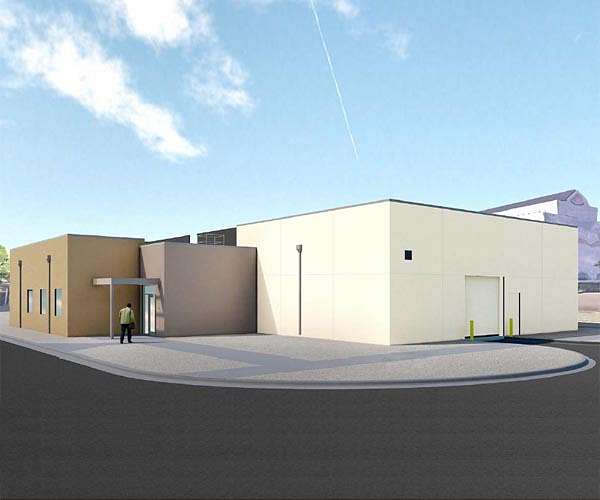
The Air Force Research Laboratory, or AFRL, held a ground-breaking ceremony, Nov. 16, 2022, beginning construction on the Facility for Radiation Tolerance Research on Electronics for Space and Strategic Systems, or FORTRESS, a 6,200-square-foot, $4.5 million facility, located adjacent to the AFRL Space Vehicles Directorate Deployable Structures Laboratory. The facility is designed to enable AFRL researchers to investigate and develop solutions for trusted, high-performance electronic components with necessary space and strategic-hardening to ensure the survivability of key U.S. Space Force and Air Force systems in harsh, natural and man-made environments. "Replacing a facility that is over 50 years old, this new laboratory will provide a state-of-the-art structure to house and use our irreplaceable test equipment," said Erin Pettyjohn, deputy director of AFRL's Space Vehicles Directorate. "Ionizing radiation sources are essential for the development of technologies and components needed for our national security space and nuclear deterrence systems and operations." AFRL scientists and engineers have been working closely with the design and build team to ensure the facility will meet the future needs of researchers in areas critical to the nation's nuclear and space missions. "This laboratory revitalization effort strengthens the U.S. supply of radiation tolerant electronic components and accelerates the transition of the highest performing technologies," said Mark Roverse, Spacecraft Technology division chief. "This facility will ensure our continued research access to disappearing sources for critical systems that comprise our nuclear and space enterprises." QA Engineering, LLC, an engineering and construction firm in Albuquerque, will construct the building with an estimated completion date of late November 2023. "We will continue our long, successful history of performing collaborative research, delivering the latest technology, and providing impartial assessments of performance for the Department of Defense community," Pettyjohn said. "Ninety-five percent of U.S. spacecraft are enabled by electronics produced or researched by this team, and we now have a facility that will see us into the future - developing cutting-edge space technologies in support of our nation's defense."
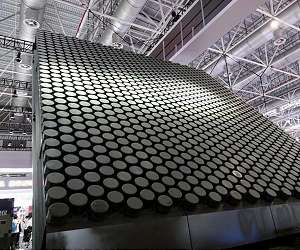
Radar used for detecting satellites put on market Nanjing. China (SPX) Nov 14, 2022 In modern military operations, reconnaissance and counter-reconnaissance have become major determinants of outcomes in combat. Great powers are unprecedentedly reliant on space-based assets, mostly low-orbiting satellites, to spy upon their rivals and adversaries, posing a challenge to those parties on how to detect spy satellites and take countermeasures. Experts have said that the first step in hiding something from snooping spacecraft must be knowing how many satellites are in orbit watch ... read more
|
|||||||||||||
| The content herein, unless otherwise known to be public domain, are Copyright 1995-2026 - SpaceDaily. All websites are published in Australia and are solely subject to Australian law and governed by Fair Use principals for news reporting and research purposes. By using our websites you consent to cookie based advertising. If you do not agree with this then you must stop using the websites from May 25, 2018. Privacy Statement. Additional information can be found here at About Us. |

 del.icio.us
 Digg
Digg Reddit
 Google







