| . |  |
. |
| . | |
. |


 by Staff Writers Geneva (AFP) Aug 1, 2018
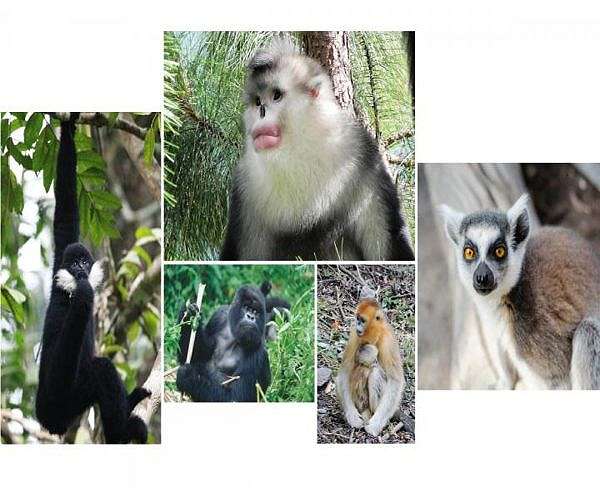
Ninety-five percent of the world's lemur population is "on the brink of extinction," making them the most endangered primates on Earth, a leading conservation group said Wednesday. The arboreal primates with pointed snouts and typically long tails are found only in Madagascar, where rainforest destruction, unregulated agriculture, logging and mining have been ruinous for lemurs, the International Union for the Conservation of Nature (IUCN) said. "This is, without a doubt, the highest percentage of threat for any large group of mammals and for any large group of vertebrates," Russ Mittermeier of IUCN's species survival commission said in a statement. Out of a total of 111 lemur species and subspecies, 105 are under threat, IUCN said, as it released its first update on the lemur population since 2012. Among the most concerning trends is an "increase in the level of hunting of lemurs taking place, including larger-scale commercial hunting," Christoph Schwitzer, director of conservation at the Bristol Zoological Society, said in the statement. He described the hunting as "unlike anything we have seen before in Madagascar." One of the species identified as "critically endangered" is the northern sportive lemur, of which there are thought to be only 50 individuals left, IUCN said. "Lemurs are to Madagascar what giant pandas are to China -- they are the goose that laid the golden egg, attracting tourists and nature lovers," said Jonah Ratsimbazafy of the domestic primate research group known as GERP. Madagascar is one of the most biodiverse nations in the world. IUCN said it was launching "a major action plan for lemur conservation," to help preserve the endangered primates.

Over 100 wildlife rangers died on duty in past year: WWF Paris (AFP) July 31, 2018 More than 100 wildlife rangers died on the job in Asia and central Africa over the last year, nearly half killed by poachers, the WWF reported Tuesday. Illegal hunters are decimating endangered wildlife to gather rhino horns and big cat body parts to sell in East Asia, as well as bush meat - including gorillas, monkeys, lions and pangolins - to eat. One-in-seven park rangers across the two regions - home to many of the planet's richest biodiversity hotspots - were seriously injured over the ... read more
|
|||||||||||||
| The content herein, unless otherwise known to be public domain, are Copyright 1995-2026 - SpaceDaily. All websites are published in Australia and are solely subject to Australian law and governed by Fair Use principals for news reporting and research purposes. By using our websites you consent to cookie based advertising. If you do not agree with this then you must stop using the websites from May 25, 2018. Privacy Statement. Additional information can be found here at About Us. |

 del.icio.us
 Digg
Digg Reddit
 Google







