| . |  |
. |
| . | |
. |


 By Patrick GALEY Paris (AFP) Jan 25, 2021
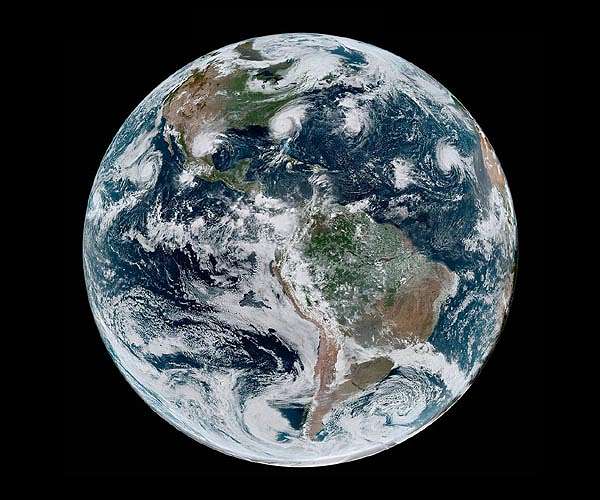
Almost half a million people have died in natural disasters linked to extreme weather events in the last 20 years, according to a new assessment of the direct threat posed to humanity by climate change. The mortality burden of climate-related catastrophes such as storms, flooding and heatwaves is overwhelmingly borne by developing countries. At the start of the Climate Adaptation Summit, held virtually this year due to the pandemic, the think tank Germanwatch calculated that these disasters have cost the global economy a staggering $2.56 trillion this century. An analysis of more than 11,000 extreme weather events showed nearly 480,000 fatalities since 2000, with Puerto Rico, Myanmar and Haiti the worst hit countries, it said. Under the 2015 Paris climate deal, wealthier nations are supposed to provide $100 billion every year to help poorer states mitigate temperature rises and adapt to the changing climate. But recent research suggests the true amount of funding available to developing countries for climate action is vastly lower. Germanwatch's Global Climate Index examined the impact of two decades of extreme weather events, particularly the 2019 storm season, which produced hurricanes and cyclones that devastated parts of the Caribbean, east Africa and south Asia. "This shows that poor vulnerable countries face particularly great challenges in dealing with the consequences of extreme weather events," said co-author David Eckstein. "They urgently need financial and technical assistance." - Funding gap - Adaptation -- reducing the fallout among communities and increasing their capacity to deal with climate-related disasters such as floods and drought -- is a pillar of the Paris accord. The deal earmarks $50 billion annually to adaptation, but as disasters have multiplied in the years since it was struck, the United Nations says the cost will balloon over the coming years. Out of an estimated $70 billion needed by developing nations each year, only $30 billion is currently available. In its Adaptation Gap report this month, the UN's Environment Programme said the true annual cost of adapting to climate impacts could be as high as $300 billion by 2030 and $500 billion by mid-century. Eight out of the top ten most affected countries on Monday's index have low or lower middle income per capita. "Poorer countries are hit hardest because they are more vulnerable to the damaging effects of a hazard and have lower coping capacity," said co-author Vera Keunzel. She said countries such as Haiti, the Philippines and Pakistan were hit nearly constantly by extreme weather events, leading them no time to fully recover from one disaster before the next strikes. The Climate Adaptation Summit, hosted by the Netherlands, will see countries convene virtually to seek "clear commitments to deliver concrete new endeavours" to help countries deal with the changing climate.

Wuhan bustles a year after world's first coronavirus lockdown Wuhan, China (AFP) Jan 21, 2021 Barriers still enclose Wuhan's notorious seafood market - one of the few immediate reminders the city was once the epicentre of the coronavirus pandemic that has transformed the world. Otherwise, the new normal in the central Chinese city of 11 million is much like the old reality; cars buzz down highways, sidewalks bustle with shoppers, and public transport and parks are busy. On Saturday, the city where Covid-19 was first detected in late 2019 marks one year since it was locked down to crush ... read more
|
|||||||||||||
| The content herein, unless otherwise known to be public domain, are Copyright 1995-2026 - SpaceDaily. All websites are published in Australia and are solely subject to Australian law and governed by Fair Use principals for news reporting and research purposes. By using our websites you consent to cookie based advertising. If you do not agree with this then you must stop using the websites from May 25, 2018. Privacy Statement. Additional information can be found here at About Us. |

 del.icio.us
 Digg
Digg Reddit
 Google







