| . |  |
. |
| . | |
. |


 by Senior Airman Arielle Vasquez, 50th Space Wing Public Affairs Schriever AFB CO (SPX) Apr 26, 2017
At 25-years old, Global Positioning System Satellite Vehicle Number 27 completed its time in orbit before the 2nd Space Operations Squadron said goodbye via final command and disposal here April 18. SVN 27 was launched in 1992, meaning it performed more than triple its design life of 7.5 years. "The most interesting thing about this process for me, was the ability to do some experimentation and advance training prior to the disposal," said 1st Lt. Cameron Smith, 2 SOPS bus subsystem analyst. "Experimentation started in mid-March which consisted of advance training opportunities and vehicle component validation. This was very exciting and new to a lot of people in 2 SOPS." Smith explained underperforming satellites, such as SVN 27, are removed from the GPS constellation to make room for satellites with increased capability. Since GPS satellites do not carry the amount of fuel required for de-orbit maneuvers, they are instead pushed to a higher orbit, roughly 1,000 kilometers above the operational GPS orbit. During the final contact with the vehicle, the satellite is commanded into the safest, lowest energy state possible. This means all fuel has been depleted from the fuel tanks, the batteries are unable to hold a charge and the vehicle is in a spin-stabilized configuration. Bus component degradations and navigational issues, among other reasons, usually kill a satellite. Fortunately for SVN 27, there were no major flaws throughout its life span. "SVN 27 was disposed of because its navigation payload could no longer perform up to the GPS standards," said 1st Lt. Shannon Sewell, 2 SOPS subsystem analysis chief. "In 1993, a year after it launched, it had a suspect component we never tested out until we disposed of it. The decoder wasn't fully powered. Since it was a backup, we made a decision to leave it in the same configuration. However, this did not cause any major effects during its life span." In the last two years, the unit conducted six disposal operations. For Sewell, even though she has witnessed final commands given during past disposal operations, this marked the first time she sent the kill command. "It's a rite of passage to send out the last command to vehicles," said Sewell. "This was my sixth and final disposal in the shop before I move on, but the first kill command I sent. It was a great way to end my tenure here and was a unique opportunity." So far, there have been 28 disposal operations in 2 SOPS history, which support the Air Force's GPS modernization efforts.
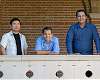 Researchers working toward indoor location detection
Houston TX (SPX) Apr 18, 2017 Rice University computer scientists are mapping a new solution for interior navigational location detection by linking it to existing sensors in mobile devices. Their results were presented in a paper at last month's 2017 Design, Automation and Test in Europe (DATE) Conference in Lausanne, Switzerland. Six months ago, the same researchers published a paper on their first technology for a n ... read more Related Links Schriever AFB GPS Applications, Technology and Suppliers

|
|||||||||||||
| The content herein, unless otherwise known to be public domain, are Copyright 1995-2026 - SpaceDaily. All websites are published in Australia and are solely subject to Australian law and governed by Fair Use principals for news reporting and research purposes. By using our websites you consent to cookie based advertising. If you do not agree with this then you must stop using the websites from May 25, 2018. Privacy Statement. Additional information can be found here at About Us. |


 del.icio.us
 Digg
Digg Reddit
 Google







