|
 |
 |
 |
 |
 |
 |
 |
 |
 |

| . |  |
. |
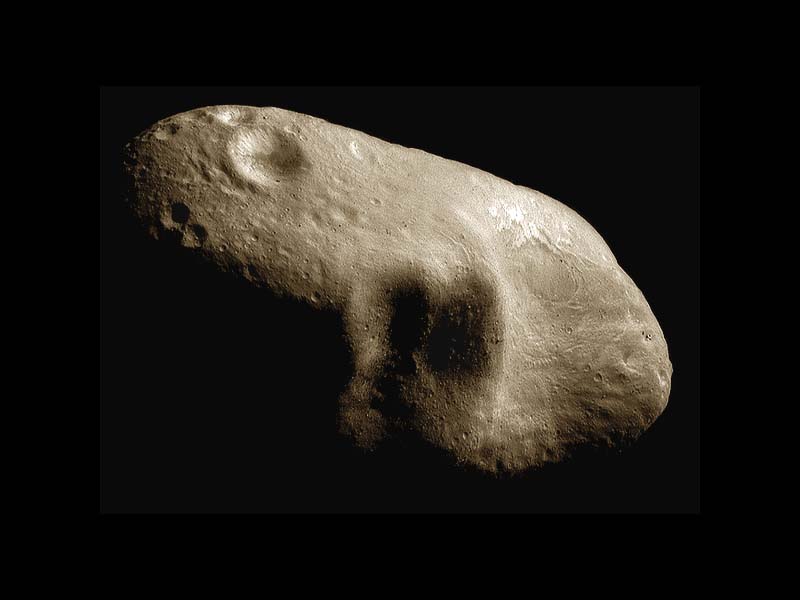
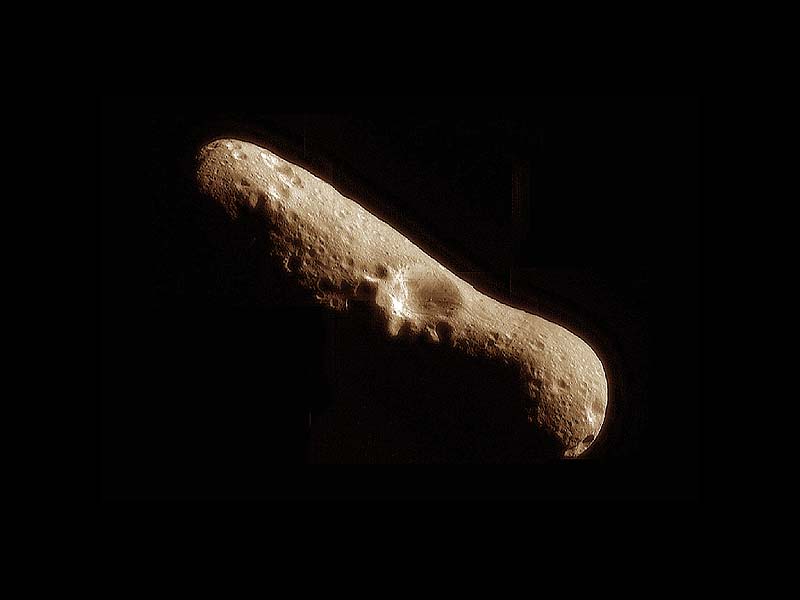
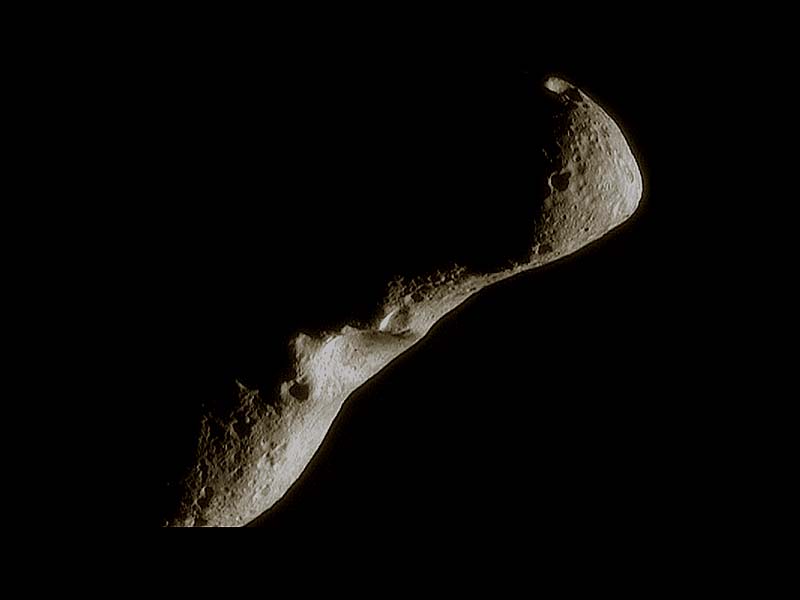
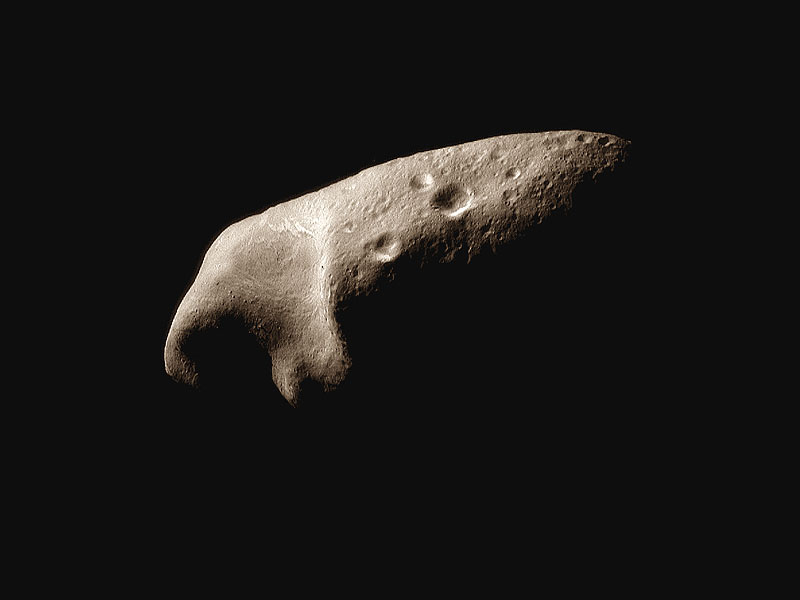
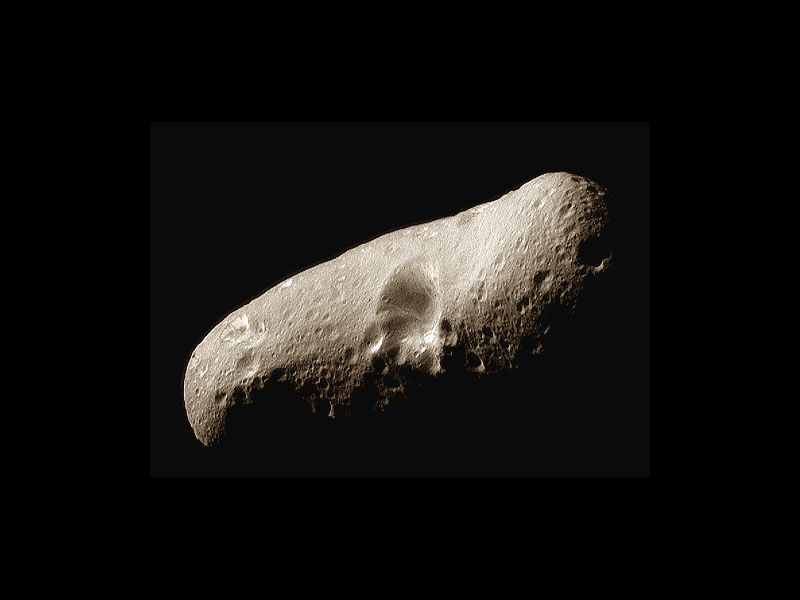
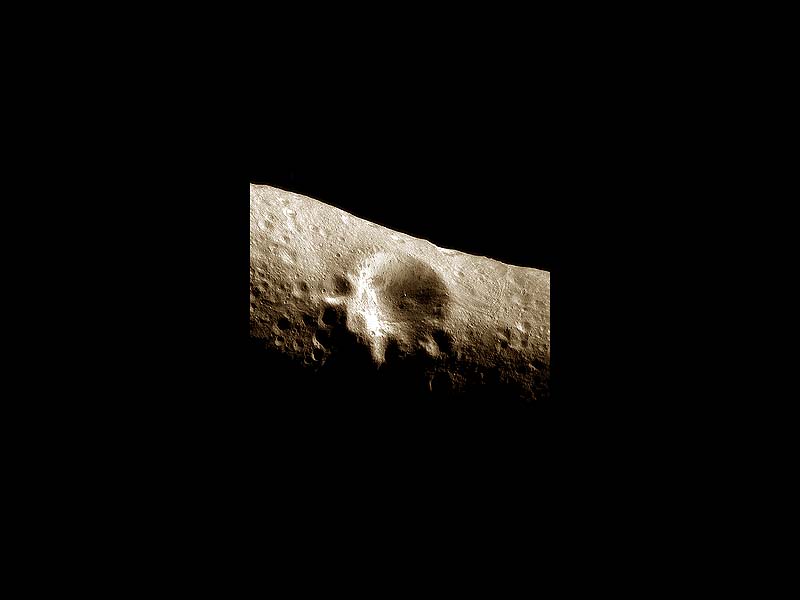
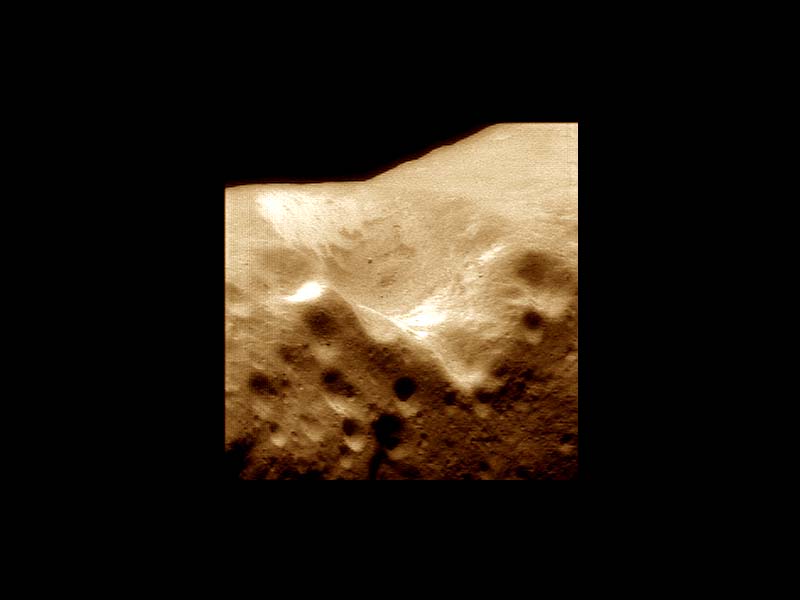
Laurel - March 15, 2000 - After scarcely a month in orbit around asteroid Eros, NASA's Near Earth Asteroid Rendezvous (NEAR) spacecraft is astounding scientists with ever more detailed views of geologic features and with technical scientific accomplishments. NEAR team members have found evidence of geologic phenomena that could have originated on a much larger parent body from which Eros was derived. In their search to decipher the mysteries of Eros, they have obtained the first ever laser range returns from an asteroid and the first ever x-ray detection of an asteroid. High-resolution images are surprising scientists by the abundance of ridges, chains of craters, and boulders. "Eros in our first month of observations has proven to be a marvelous and fascinating object," says Dr. Andrew F. Cheng, NEAR Project Scientist from the Johns Hopkins University Applied Physics Laboratory in Laurel, Md., which manages the mission for NASA. NEAR's first x-ray detection of Eros demonstrated the presence of magnesium, iron, and silicon and possibly aluminum and calcium. Their detection was the result of a brilliant solar flare on March 2, when NEAR was 131 miles (212 kilometers) from Eros. That solar explosion made it possible for the spacecraft's x-ray spectrometer to view the asteroid from four times farther away than it was designed to do. "The solar x-ray burst caused elements on the asteroid to react and emit fluorescent x-rays that were measured by the spectrometer," says Dr. Jacob I. Trombka of NASA's Goddard Space Flight Center, who heads the x-ray/gamma ray instrument team. "It was only a 600-second window of opportunity but it is a huge bonus for the mission. This detection at the higher orbit gives us confidence in our ability to develop elemental maps when we're at our operational orbit of 50 kilometers," he says. In what is the first detection of a laser return from an asteroid, the spacecraft's laser rangefinder, operating 180 miles (290 kilometers) from Eros, measured topographic profiles of chains of pits or craters. "As we accumulate more data we will be able to determine if the features are from erosion, fault lines, tectonic stress lines, or other events," says Dr. Maria T. Zuber of the Massachusetts Institute of Technology and NASA Goddard Space Flight Center, who heads the laser rangefinder science team. In the last two weeks, the NEAR multispectral imager has returned more than 2,400 images. The spacecraft has been in a nearly circular orbit around Eros, traveling approximately 124 miles (200 kilometers) from the asteroid's center, and taking images closer to an asteroid than has ever been done before. The unprecedented images show chains of craters, numerous boulders as small as 55 yards (50 meters) across, and long ridges that extend for several kilometers across the surface. Conspicuous on many of the crater walls are bright markings that Dr. Peter C. Thomas of Cornell University says are part of the loose, fragmental material on the surface, called regolith. This material appears to vary in properties across the asteroid, perhaps in response to impact cratering events. "We have found that Eros is literally covered with craters smaller than about 1 mile (1.6 km) in diameter," says Dr. Clark R. Chapman of Southwest Research Institute. Both Drs. Thomas and Chapman are members of the multispectral imager and near-infrared spectrometer science team. On April 1, the spacecraft will begin descending toward a 62-mile (100-kilometer) orbit, where the resolution of the imager will more than double. By the mission's end in February 2001, the total surface will have been imaged, measured and analyzed.
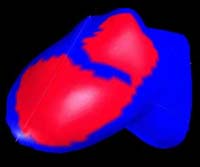
Greenbelt - March 13, 2000 - Like a shy bride peeking from beneath her veil, the asteroid Eros gave researchers using the NEAR spacecraft the first glimpse of its true nature after massive solar flares briefly lit its surface. The elements magnesium, aluminum, silicon, and iron were observed. These are important elements in studying the formation of solar system bodies.
Eros Desktops:
1 -
2 -
3 -
4 -
5 -
6 -
7
|
|
| ||||||||||
| The content herein, unless otherwise known to be public domain, are Copyright 1995-2016 - Space Media Network. All websites are published in Australia and are solely subject to Australian law and governed by Fair Use principals for news reporting and research purposes. AFP, UPI and IANS news wire stories are copyright Agence France-Presse, United Press International and Indo-Asia News Service. ESA news reports are copyright European Space Agency. All NASA sourced material is public domain. Additional copyrights may apply in whole or part to other bona fide parties. Advertising does not imply endorsement, agreement or approval of any opinions, statements or information provided by Space Media Network on any Web page published or hosted by Space Media Network. Privacy Statement All images and articles appearing on Space Media Network have been edited or digitally altered in some way. Any requests to remove copyright material will be acted upon in a timely and appropriate manner. Any attempt to extort money from Space Media Network will be ignored and reported to Australian Law Enforcement Agencies as a potential case of financial fraud involving the use of a telephonic carriage device or postal service. |