|
 |
 |
 |
 |
 |
 |
 |
 |
 |

| . |  |
. |
The Mystery Of The Module
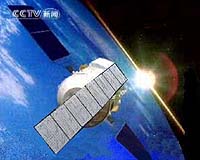
Sydney, Australia (SPX) Oct 28, 2005 The Shenzhou 6 orbital module is still flying, and Chinese media statements hint that it's probably functioning well. Soon after the crew of Shenzhou 6 returned to Earth, the module was boosted into a higher orbit which will prolong its orbital life and increase the electricity from its solar panels. But what exactly is the orbital module doing? Earlier, SpaceDaily speculated on the external experiment payload carried on the module. Chinese statements on the matter were vague, and the only clues available were computer graphics and models of the spacecraft. Your correspondent ventured a guess that a flat, boxy panel on the side of the orbital module could be some sort of antenna, possibly part of a Synthetic Aperture Radar system. A short tab-like structure was also observed protruding from the front of the orbital module, which could have been a space environment probe or a small antenna. Apart from these features, the Orbital Module of Shenzhou 6 looks unusually spartan. There is no sign of large cameras or antenna groups clustered at the front of the orbital module, as we have observed on previous missions. But it seems unreasonable to expect that China would send the Orbital Module on an extended mission without a worthy payload on board. Another look at these clues suggests a connection between the pointed tab and the flat panel. They are aligned on the same radial axis of the orbital module, and relatively close together. This suggests they are designed to work together. It could be possible that the tab is a transmitter of some form, and that the flat panel is the receiver for an echoed signal. But there could be a more mundane explanation. If this is a Synthetic Aperture Array, the tab could simply be a locking point for an unfolding antenna. The flat panel could unfold hinge, and the unfolded segment could click into the tab. This would produce an antenna array that's parallel with the long axis of the module. There's an obvious advantage to this. The solar panels would not be eclipsed by the unfolded antenna. Some graphics also depict another tab-like structure on the side of the module, beside the radar array. This could be a locking tab (assuming that the array unfolds in a different direction) but it could also be a feed horn for an electromagnetic receiver. This could be used to check background radiation from the Earth's surface for calibration purposes, or an antenna for telemetry. China noted in its only media statement on the current status of the orbital module that there would be more power from its new orientation and orbit. This is certainly true, but it's a curious statement. It suggests that something is drawing that power, and as previously noted, radar is power-hungry. The solar panels on Shenzhou are not as large as most engineers would want for a radar array, but it should still be possible to operate a radar system for brief periods. Batteries would simply be charged up over a long interval, and the radar would then be switched on when a suitable target was beneath the orbital track. Until China discusses more about this mission, the mystery will continue. Related Links SpaceDaily Search SpaceDaily Subscribe To SpaceDaily Express
 Giant Chinese Space-Tracking Ship Makes Rare Visit
 Auckland, New Zealand (SPX) Oct 27, 2005
A big Chinese space-tracking ship bristling with satellite dishes is on a rare but low-key visit. |
|
|

| The content herein, unless otherwise known to be public domain, are Copyright 1995-2006 - SpaceDaily.AFP and UPI Wire Stories are copyright Agence France-Presse and United Press International. ESA PortalReports are copyright European Space Agency. All NASA sourced material is public domain. Additionalcopyrights may apply in whole or part to other bona fide parties. Advertising does not imply endorsement,agreement or approval of any opinions, statements or information provided by SpaceDaily on any Web page published or hosted by SpaceDaily. Privacy Statement |