| . |  |
. |
| . | |
. |


 by Staff Writers Paris (AFP) Oct 14, 2015
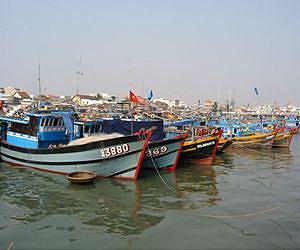
Years of overfishing have cut OECD countries' productive capacity while Chinese-led consumption growth has shifted production focus to Asia, a report by the Paris-based organisation said Wednesday. The fisheries trade share for the 34 member states of the Organisation for Economic Co-operation and Development has shrunk, while Asia's has spiked on soaring Chinese demand, a new OECD report said. Overall OECD fisheries production has slumped by two-fifths since 1988 because overfishing has squeezed productive capacity, it said. The OECD added that last year was the first time that aquaculture production -- the breeding of fish for harvesting -- became a bigger source of fish products for consumers than capture fisheries with an annual growth rate of seven percent. In the meantime, Asia has become "the centre of gravity of fish production, consumption and trade", the report said. "The solution to restarting growth in OECD fisheries is improved management," said Roger Martini, the organisation's senior fisheries analyst. "This is an area where countries have been making some progress, but much more remains to be done before all OECD fish stocks are fully recovered." The grouping of the world's most advanced economies includes only four states in the Asia-Pacific region -- Australia, Japan, New Zealand and South Korea. The organisation noted that China and Indonesia account between them for nearly a quarter of global fish harvests. Per capita annual consumption in China rose some 40 percent between 2000 and 2011 to 14.62 kilos (32.16 pounds). The OECD added that "China is now simultaneously the largest marine fisheries producer, the largest aquaculture producer and the largest net exporter of fish products."
Related Links Water News - Science, Technology and Politics
|
|||||||||||||
| The content herein, unless otherwise known to be public domain, are Copyright 1995-2026 - SpaceDaily. All websites are published in Australia and are solely subject to Australian law and governed by Fair Use principals for news reporting and research purposes. By using our websites you consent to cookie based advertising. If you do not agree with this then you must stop using the websites from May 25, 2018. Privacy Statement. Additional information can be found here at About Us. |


 del.icio.us
 Digg
Digg Reddit
 Google