|
 |
 |
 |
 |
 |
 |
 |
 |
 |

| . |  |
. |
NASA Device Is All About Heart
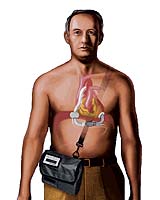
Houston TX (SPX) Aug 09, 2004 The human heart beats over 100,000 times a day and 35 million times a year. Given such reliability, it's easy to take the health of our body's most vital organ for granted. Yet for the thousands of Americans with congestive heart failure awaiting transplants, every beat counts in a race against time. Hoping to add time to the ticking clock, NASA's Johnson Space Center in Houston, Texas teamed up with doctors at Baylor College of Medicine, also in Houston, to design a device that could do the work for failing hearts. Patients using the DeBakey VAD will have the device installed inside of their chests and wear an external battery pack to power the pump. Credit: NASA Congestive heart failure occurs when the left side of the heart has difficulty pumping oxygen-rich blood to the body. To help itself, the heart raises the pumping pressure in an effort to increase circulation. This escalation in pressure can cause blood flowing into the left side of the heart to back up and fill the lungs with fluid. Patients begin to have trouble with breathing, dizziness and experience other dangerous symptoms. The team's solution came in the form of the MicroMed DeBakey VAD, a tiny 1- by -3 inch, battery-powered heart pump. The VAD is surgically implanted into the chest of the patient and powered by a battery worn outside of the body. A good design overall, the first edition of the VAD had two flaws. Pressure and friction inside the pump damaged blood cells that passed through. The pump was also plagued with stagnant areas that allowed blood to gather and clot. For answers to these problems, the developers contacted Cetin Kiris and Dochan Kwak at NASA's Ames Research Center at Moffet Field, California. Both Kiris and Kwak work in the NASA Advanced Supercomputing Division, where they simulate fluid flow through rocket engines. While rockets and the human heart may appear unrelated, according to Kiris, they're not that different. "The speed of fluid through a rocket engine is faster than blood flow, but very similar in many ways," said Kiris. Teaming NASA's supercomputers with software used to model fuel flow through Space Shuttle engines, Kiris and Kwak sought a solution to the VAD's problems. The Ames researchers put their tools and talents together and were successful in refining the pump design to eliminate the flaws and make it better than ever. Today, hundreds of heart failure patients around the world are leading better lives thanks to the miniaturized VAD. Given the success, the device is even under consideration now as a possible alternative to heart transplant. The DeBakey VAD works so well, it could almost be taken for granted. Related Links MicroMed Technology SpaceDaily Search SpaceDaily Subscribe To SpaceDaily Express
 NASA Scientists Study Gene Functions To Treat Diseases
 Moffett Field CA (SPX) Aug 05, 2004
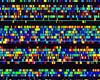
NASA scientists have discovered a way to identify the gene functions of all of an organism's genes simultaneously by using unique DNA sequences or 'bar codes.' |
|
|

| The content herein, unless otherwise known to be public domain, are Copyright 1995-2006 - SpaceDaily.AFP and UPI Wire Stories are copyright Agence France-Presse and United Press International. ESA PortalReports are copyright European Space Agency. All NASA sourced material is public domain. Additionalcopyrights may apply in whole or part to other bona fide parties. Advertising does not imply endorsement,agreement or approval of any opinions, statements or information provided by SpaceDaily on any Web page published or hosted by SpaceDaily. Privacy Statement |