| . |  |
. |
| . | |
. |


 by Staff Writers Kazan, Russia (SPX) Dec 27, 2018
Meteor burst communication is based on using meteors as cryptography assistants. Meteor trails reflect radio waves, which makes them suitable for radio transmissions at distances of up to 2,000 kilometers. Unpredictable nature of meteors makes pose a significant hindrance for signal interception. Associate Professor Amir Sulimov explains, "Each meteor trail forms a kind of a shadow resembling an ellipse on the Earth's surface. All communication stations within that area can tune in on the channel. Meteor trails help determine a specific area where potential malefactors can try to intercept the signal." Traditionally, it was theorized that the longest radius of interception lies along the radio line between legal points A and D, while the shortest radius, conversely, is perpendicular to that axis. "In our research, we are the first to show that this trend may not be persistent in meteor systems, especially on short lines of less than 500 km. Because of the random nature of meteor arrivals, orientations of the large and small radiuses can differ significantly. "And the degree of that difference is also variating, depending on seasonal and daily meteor cycles. Such regularities make meteor communication interception quite difficult. "Experiments and models showed that the practical possibility of intercepting a meteor channel disappears at 30 kilometer distances, but theoretical chances persist at distances of up 300 km along small radiuses and 850 kilometers along large radiuses," concludes Sulimov. The obtained data may be used for meteor cryptography. Further research should show the distances at which partial interception of cryptographic keys is feasible. Analysis of Joint Channel Coexistence Time at Space-Diversity Radio Reception of Meteor Reflections
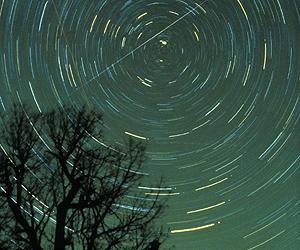
Get ready to greet the Geminid Meteors Boston MA (SPX) Dec 10, 2018 If it's clear the nights of Thursday and Friday, December 13th and 14th, step outside and look up - you may very well see streaks of light across the sky from the annual Geminid meteor shower. Although the Perseids, which arrive each August, are better known, the Geminids often put on a better show. "Maybe because it's cold for so many during this shower's peak," says Diana Hannikainen, observing editor at Sky and Telescope. "But the Geminids are often the best display of 'shooting stars' all year ... read more
|
|||||||||||||
| The content herein, unless otherwise known to be public domain, are Copyright 1995-2026 - SpaceDaily. All websites are published in Australia and are solely subject to Australian law and governed by Fair Use principals for news reporting and research purposes. By using our websites you consent to cookie based advertising. If you do not agree with this then you must stop using the websites from May 25, 2018. Privacy Statement. Additional information can be found here at About Us. |

 del.icio.us
 Digg
Digg Reddit
 Google







