|
 |
 |
 |
 |
 |
 |
 |
 |
 |

| . |  |
. |
China's Space Ambitions Potential Threat To US: Analysts
Washington (AFP) Oct 11, 2005 With China on the eve of launching its second manned spaceflight, Washington sees Beijing's space ambitions as an emerging security concern, with the potential for the Asian giant to boost its military capabilities and eventually challenge US dominance in space. "US concern about China's space capabilities are first that China might eventually develop the ability to attack US satellites, because the US military is heavily dependent on them," said Phillip Saunders of the Pentagon-linked Institute for National Strategic Studies. "Second, as China space capabilities improve, it will have the ability also to improve its other military options," Saunders told AFP. The goals of the Chinese space program are primarily commercial, scientific and for national prestige, "but improved space technology could significantly boost Chinese military capabilities," he said. The state-run Xinhua news agency said Shenzhou VI would lift off Wednesday morning from the Jiuquan Satellite Launch Center on the edge of the Gobi desert, carrying two astronauts into orbit for five days. China's first manned launch in October 2003 made it only the third nation after the former Soviet Union and the United States to send an astronaut into orbit. "With China's entry into the exclusive human spaceflight club, the strategic gameboard was put in motion," Joan Johnson-Freese, a professor at the Naval War College, told a congressional hearing earlier this year. With other space players the United States has adopted an approach of simultaenous cooperation and competition. The United States cooperates with Russia, Europe and the Japanese in endeavours concerning the International Space Station, but competes with them over commercial satellites, for example. But Washington treats China purely as a rival, Johnson-Freese said. The reasons are both technical and political. Washington does not want China to acquire sensitive technology that could one day be put to military use and enable China to challenge its sole superpower status, she said. Nor does it want to support the world's largest Communist government. "While such an approach may be virtuous, realities are such that it increasingly appears counter-productive," Johnson-Freese said. Echoing that opinion was Theresa Hitchens, director of the Center for Defense Information. "In the White House they seem to be divided on an overall policy toward China but it's certainly true that the Pentagon more and more sees China as a direct potential threat in space," she said. "That's clear from their documents that they have released on China's military power." The Rumsfeld Commission report, a strategic assessment ordered by Defense Secretary Donald Rumsfeld and made public in 2001, warned of the potential of a "Pearl Harbor in space" -- a surprise attack by a country like China on US military satellite infrastructure. But China is far behind the United States in the space race, Hitchens said. "I think it is possible that China becomes a threat in the future and to avoid that, it's better to cooperate now," she said. "Like the cooperation with the Russians, you understand what they are up to by cooperating with them," said Hitchens, an expert on the militarization of space. China's space budget is estimated to be 2.2 billion dollars annually, while NASA, the US space agency, has 16 billion dollars to spend a year. Related Links SpaceDaily Search SpaceDaily Subscribe To SpaceDaily Express
 China To Launch Shenzhou-6 Between Oct.12-15
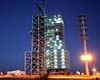 Beijing (XNA) Oct 11, 2005
China will launch its second manned spacecraft, Shenzhou-6, from a launch center in northwest China at a proper time between October 12 and 15, said an officialof the China manned space program Tuesday. |
|
|

| The content herein, unless otherwise known to be public domain, are Copyright 1995-2006 - SpaceDaily.AFP and UPI Wire Stories are copyright Agence France-Presse and United Press International. ESA PortalReports are copyright European Space Agency. All NASA sourced material is public domain. Additionalcopyrights may apply in whole or part to other bona fide parties. Advertising does not imply endorsement,agreement or approval of any opinions, statements or information provided by SpaceDaily on any Web page published or hosted by SpaceDaily. Privacy Statement |