| . |  |
. |
| . | |
. |


 by Staff Writers Nairobi (AFP) March 15, 2017
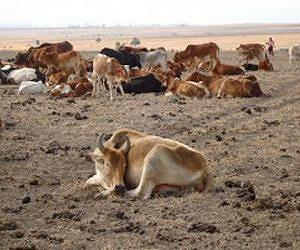
Thirteen people, mostly women and children, have been killed in central Kenya this week in a cycle of violence between rival farming tribes hit by drought, police and the Red Cross said. Police spokesman George Kinoti said the violence broke out on Monday when Ilchamus herdsmen, a sub-group of the Tugen people, launched an attack on members of the Pokot tribe seeking to steal their cattle. Two men died in the fighting in Baringo, which lies some 250 kilometres (150 miles) north of Nairobi. On Tuesday two Pokot women were killed, provoking further anger among the community which organised their own punitive overnight raid. "Suspected Pokot raiders in a retaliatory attack to avenge the killing of their town women... attacked Mukutani market", killing five women and four children, Kinoti said in a statement. Four other people were wounded in the last attack, including a baby and two children, the Kenyan Red Cross said. "It is unfortunate that the majority of those killed are children and women," Kenyan Red Cross Society head Abbas Gullet said in a separate statement. "I call upon all involved parties to this conflict, especially community elders from the Pokot, Tugen and Ilchamus communities to come to the table and resolve this conflict, to avoid further loss of innocent life," he added. Outbreaks of violence have multiplied in central Kenya in recent weeks among groups of semi-nomadic herders mong the hardest hit by the drought which is affecting swathes of eastern Africa. Heavily armed herders have in recent weeks forced their way into private ranches in central Laikipia, slaughtering wildlife and destroying property in invasions blamed on a biting drought, but also local politics. A British farmer was shot dead on March 6 while going to inspect damage on his vast ranch caused by herders seeking pasture for their own animals The police spokesman said security operations had been intensified after the latest violence.
 Vicious circle of drought and forest loss in the Amazon
Potsdam, Germany (SPX) Mar 15, 2017 Logging that happens today and potential future rainfall reductions in the Amazon could push the region into a vicious dieback circle. If dry seasons intensify with human-caused climate change, the risk for self-amplified forest loss would increase even more, an international team of scientists finds. If however there is a great variety of tree species in a forest patch, according to the study t ... read more Related Links Climate Science News - Modeling, Mitigation Adaptation 
|
| The content herein, unless otherwise known to be public domain, are Copyright 1995-2026 - SpaceDaily. All websites are published in Australia and are solely subject to Australian law and governed by Fair Use principals for news reporting and research purposes. By using our websites you consent to cookie based advertising. If you do not agree with this then you must stop using the websites from May 25, 2018. Privacy Statement. Additional information can be found here at About Us. |
 del.icio.us
 Digg
Digg Reddit
 Google






