
 |
 |
 |
 |
 |
 |
 |
 |
 |
 |

| . |  |
. |
Saturn Passes Behind Sun With Cassini In Orbit
The Cassini spacecraft emerged from behind the Sun today after being in solar conjunction since July 5. The most recent spacecraft telemetry was acquired from the Deep Space Network's Goldstone tracking station near Barstow, Calif., today. The spacecraft is in excellent health and operating normally. Just before Cassini began its transit behind the Sun, it snapped pictures of Saturn's moons Mimas, Tethys, Rhea and Iapetus. Solar conjunction occurs when the Sun is between the spacecraft and Earth. During this time, the spacecraft conducts only limited science observations. Command and downlink capability is reduced to a minimum, with an uplink command file consisting of 10 commands sent every five minutes, 10 to 20 times a day. The purpose of this test is to assess the spaceraft's ability to receive commands from Earth when the signal path goes so close to the Sun. Related Links Cassini-Huygens Mission SpaceDaily Search SpaceDaily Subscribe To SpaceDaily Express  Saturn's Rings In Ultraviolet
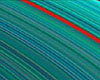 Moffet Field CA (SPX) Jul 09, 2004
The best view ever of Saturn's rings in the ultraviolet indicates there is more ice toward the outer part of the rings, hinting at ring origin and evolution, say two University of Colorado at Boulder researchers involved in the Cassini mission.
|
|
| |||||||||
| The content herein, unless otherwise known to be public domain, are Copyright 1995-2016 - Space Media Network. All websites are published in Australia and are solely subject to Australian law and governed by Fair Use principals for news reporting and research purposes. AFP, UPI and IANS news wire stories are copyright Agence France-Presse, United Press International and Indo-Asia News Service. ESA news reports are copyright European Space Agency. All NASA sourced material is public domain. Additional copyrights may apply in whole or part to other bona fide parties. Advertising does not imply endorsement, agreement or approval of any opinions, statements or information provided by Space Media Network on any Web page published or hosted by Space Media Network. Privacy Statement All images and articles appearing on Space Media Network have been edited or digitally altered in some way. Any requests to remove copyright material will be acted upon in a timely and appropriate manner. Any attempt to extort money from Space Media Network will be ignored and reported to Australian Law Enforcement Agencies as a potential case of financial fraud involving the use of a telephonic carriage device or postal service. |

