



|
|
|
|
|
|
|
|
|
|
|


| . |  |
. |
|
|
|
 by Staff Writers Paris, France (SPX) Dec 03, 2008
Water shapes societies, but it is a factor only just beginning to be appreciated by social scientists. The Norwegian professor, writer and film maker Terje Tvedt, of the Universities of Oslo and Bergen, argues that water has played a unique and fundamental role in shaping societies throughout human history. Speaking at a European Science Foundation and COST conference in Sicily in October, Tvedt proposed that social scientists and historians have long made a serious error by not taking natural resources into account in their attempts to understand social structures. Water, according to Tvedt, is a unique natural resource for two reasons. First, it is absolutely essential for all societies, because we cannot live without it. Secondly, it is always the same. Whatever you do with water on the surface of the Earth, it reemerges. "You can destroy or create rivers and lakes," he says, "but you cannot destroy water itself."
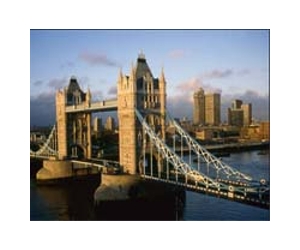
How rivers shaped industry They debate about whether it is because of specific political ideologies and social structures in Europe at the time, or due to the unequal relationship that already existed between Europe and the rest of the world, through slavery and colonialism. The two theories can be termed exceptionalism and exploitation, respectively. But according to Tvedt, the structure of the water system can adequately explain why the industrial revolution began in Britain. The early industrial revolution was enabled by the power of water mills, and bulk transport of goods by canal. Britain's rivers were perfect for both things. They provided a good network across the country. All are fairly close to the sea, with good flows throughout the year and not too much silt. Elsewhere in the world, rivers were too silty, too large and uncontrollable, all flowing in the same direction or had flows that were too seasonally variable. The exclusion of nature from our understanding of society is not a benign, academic problem. "Since World War II, the dominant theories relating to the international aid system have, without exception, disregarded the role of nature," Tvedt says. "Modernisation theory has told us that all societies could develop modernism in the same way, if they just find the right economic instruments." This, he argues, is simply not right.
Global water trade The water footprint for an individual, community or business is the total volume of freshwater used to produce the goods and services consumed by that individual or community or produced by that business. Water use is measured in terms of water volume consumed (evaporated) and/or polluted per unit of time. Developed by Arjen Hoekstra, based on Tony Allan's idea of virtual water, water footprints allow us to visualise the transfer of water that occurs during global trade. The concept produces some shocking facts. The global trade in virtual water is about 1,600 billion cubic metres a year, equivalent to 16% of world water use. Australia, the driest inhabited continent on Earth, is one of the world's largest exporters of virtual water, whilst northern hemisphere temperate areas such as northern Europe and Japan, where water is plentiful, are importers. The water footprint concept is already being enshrined in national policies as a way of accounting for water use. "Spain has just approved a regulation that requires water footprint analysis in River Basin Management Plans, which Member States need to send to the European Commission regularly from 2009, according to the Water Framework Directive," says Aldaya. "So it is now compulsory to calculate water footprints of the different socioeconomic sectors in Spain."
Related Links European Science Foundation Water News - Science, Technology and Politics
|
|
|
| The content herein, unless otherwise known to be public domain, are Copyright 1995-2014 - Space Media Network. AFP, UPI and IANS news wire stories are copyright Agence France-Presse, United Press International and Indo-Asia News Service. ESA Portal Reports are copyright European Space Agency. All NASA sourced material is public domain. Additional copyrights may apply in whole or part to other bona fide parties. Advertising does not imply endorsement,agreement or approval of any opinions, statements or information provided by Space Media Network on any Web page published or hosted by Space Media Network. Privacy Statement |
 del.icio.us
 Digg
Digg Reddit
 Google