|
|
|
|
|
|
|
|
|
|
|


| . |  |
. |
|
|
|
 by Staff Writers Jakarta (AFP) July 8, 2010
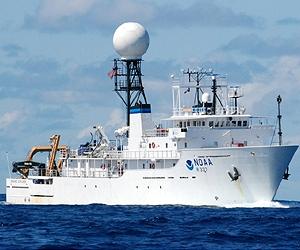
US and Indonesian scientists on Thursday launched a joint expedition to map some of the deepest oceanic trenches in the world for clues on biodiversity and volcanic vents, officials said. The US embassy in Jakarta said the first joint expedition by Indonesia and the United States marked the beginning of a "multi-year partnership to advance ocean science, technology and education". "Indonesian waters are home to more marine biodiversity than any place else in the world," Jane Lubchenco, under secretary of commerce for oceans and atmosphere, said in a statement. "We explore together to better understand, use, and protect the ocean and its resources." The work is being done by the National Oceanic and Atmospheric Administration (NOAA) and Indonesia's Marine and Fisheries Research. NOAA ship Okeanos Explorer will send live images and other data from the sea to scientists ashore in Indonesia and the United States. The ship is fitted with a deep water multibeam sonar mapping system and a remotely operated submarine which can dive to a depth of 6,000 metres (19,700 feet). Data and images can be beamed from the vehicle to the shore in real-time using the ship's "telepresence" technology, a kind of high-speed Internet. "Explorers expect discoveries that will advance our understanding of undersea ecosystems and volcanic hydrothermal vent activity where biologically unique communities typically are found," an embassy statement said. "Discoveries could also advance understanding of ocean acidification processes and provide new information on deep ocean volcanically-derived gases such as carbon dioxide that have a role in climate and ecosystem variability." The joint research is the result of President Barack Obama's call for stronger scientific ties between the United States and developing countries, particularly from the Muslim world, it added.
Related Links Water News - Science, Technology and Politics
|
|
|
| The content herein, unless otherwise known to be public domain, are Copyright 1995-2014 - Space Media Network. AFP, UPI and IANS news wire stories are copyright Agence France-Presse, United Press International and Indo-Asia News Service. ESA Portal Reports are copyright European Space Agency. All NASA sourced material is public domain. Additional copyrights may apply in whole or part to other bona fide parties. Advertising does not imply endorsement,agreement or approval of any opinions, statements or information provided by Space Media Network on any Web page published or hosted by Space Media Network. Privacy Statement |
 del.icio.us
 Digg
Digg Reddit
 Google