


|
|
|
|
|
|
|
|
|
|
|


| . |  |
. |
|
|
|
 by Michael Finneran Langley VA (SPX) Oct 22, 2010
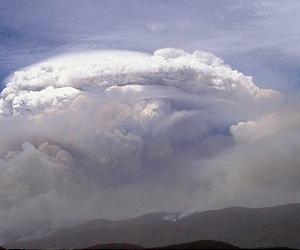
A cumulonimbus without the "pyre" part is imposing enough - a massive, anvil-shaped tower of power reaching five miles (8 km) high, hurling thunderbolts, wind and rain. Add smoke and fire to the mix and you have pyrocumulonimbus, an explosive storm cloud actually created by the smoke and heat from fire, and which can ravage tens of thousands of acres. And in the process, "pyroCb" storms funnel their smoke like a chimney into Earth's stratosphere, with lingering ill effects.
Global Impact "An individual pyroCb can inject particles into the lower stratosphere as high as 10 miles," says Dr. Glenn K. Yue, an atmospheric scientist at NASA Langley Research Center in Hampton, Va. Yue is one of eight authors of a paper on pyrocumulonimbus in the September 2010 Bulletin of the American Meteorological Society (BAMS) titled "The Untold Story of Pyrocumulonimbus." The paper reevaluates previous data to conclude that many stratospheric pollution events erroneously have been attributed to particles from volcanic eruptions. Three "mystery cloud phenomena" were cited as examples that were actually the result of pyrocumulonimbus storms, including one initially attributed to the 1991 eruption of Mount Pinatubo in the Philippines. The plume thought to have been from Pinatubo was, it turns out, from a pyrocumulonimbus storm in Canada. One reason for the misinterpretation, Yue said, is that scientists believed nothing less energetic than a volcanic eruption could penetrate Earth's "tropopause" in so short a period of time. The tropopause is the barrier between the lower atmosphere and stratosphere. "At the time, the thinking was that it was unlikely," said Yue.
SAGE II Data "Our paper also shows that pyroCbs happen more often than people realize," Yue added. In 2002, for example, various sensing instruments detected 17 distinct pyrocumulonimbus events in North America alone. Humans have been responsible for many pyrocumulonimbus storms, says Mike Fromm, lead author on the BAMS paper. The worst fire in Colorado history was set by a forestry officer "and within 24 hours there was a pyrocumulonimbus storm," says Fromm, a meteorologist at the Naval Research Laboratory in Washington, D.C. Whipped by the storm it had sparked, the 2002 fire swept across 138,000 acres (558.5 sq km) in four counties, drove more than 5,000 from their homes and killed six people. Whether human actions influence pyrocumulonimbus activity enough to significantly impact the global climate is an open question. Human activity is believed to cause climate warming that leads to more wildfires. "It's a compelling story line. We don't know enough now to say if there's enough supporting evidence of that," says Fromm. "There's lots of fairly convincing evidence that under a warming climate, there are forest areas of Siberia and Canada that will be under more heat stress than before. And it's reasonable to think that there will be more fires."
Related Links Langley Research Center The Air We Breathe at TerraDaily.com
|
|
|
| The content herein, unless otherwise known to be public domain, are Copyright 1995-2014 - Space Media Network. AFP, UPI and IANS news wire stories are copyright Agence France-Presse, United Press International and Indo-Asia News Service. ESA Portal Reports are copyright European Space Agency. All NASA sourced material is public domain. Additional copyrights may apply in whole or part to other bona fide parties. Advertising does not imply endorsement,agreement or approval of any opinions, statements or information provided by Space Media Network on any Web page published or hosted by Space Media Network. Privacy Statement |
 del.icio.us
 Digg
Digg Reddit
 Google