


|
|
|
|
|
|
|
|
|
|
|


| . |  |
. |
|
|
|
 by Staff Writers Sheffield, UK (SPX) Aug 03, 2010
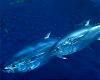
New research from the University of Sheffield has discovered that the deep open ocean, by far the largest habitat for life on Earth, is currently the most under-explored area of the sea, and the one we know least about. The research, which is published in the journal PLoS ONE, has mapped the distribution of marine species records and found that most of our knowledge of marine biodiversity comes from the shallow waters or the ocean floor, rather than the deep pelagic ocean- the water column deeper than the sunlit surface waters but above the sea bed. This area is home to uncounted animals which never experience a hard surface, including megamouth sharks, giant squid, and a myriad of smaller species of gelatinous animals and other planktonic organisms. The research was led by Dr Tom Webb, a Royal Society Research Fellow and marine ecologist from the University's Department of Animal and Plant Sciences, in conjunction with the Ocean Biogeographic Information System (OBIS) secretariat at Rutgers University, and the Consortium for Ocean Leadership in the USA. The team used data from OBIS, which collates all available information on geographical distributions of marine life, to plot the position in the water of seven million records of marine species. They combined this data with a separate dataset of the bottom surface of the ocean, and then attributed each separate record to a position in the ocean, to enable them to provide a global analysis of the depth distribution of recorded marine biodiversity. The almost limitless deep waters of the sea have been largely under explored due to a long-held belief, first expressed by Charles Wyville Thomson, leader of the challenger Expedition in the 1870s, which effectively launched the discipline of deep sea biology. He believed that life in the deep water was confined primarily to a belt at the surface and one near the sea bed, and believed the area in the middle to be almost completely without larger animals. More recent sampling, employing new techniques, has revealed that this is not the case, and the deep pelagic is actually teeming with life. The global picture provided by this new study has led to calls for increased exploration of the Earth's last frontier of biodiversity research. Dr Tom Webb said: "It's shocking that in 2010, the International Year of Biodiversity, the largest habitat on Earth remains virtually unexplored. On a more positive note, being able to highlight gaps in our knowledge is an important step towards filling them, and our analysis - the first at a global scale - was possible because of the commitment in the marine biodiversity research community to sharing data through initiatives like OBIS." Dr Ron O'Dor, Senior Scientist with the Census of Marine Life, said: "The Census of Marine Life has invested more than $650M in exploring all of the global ocean realms in the last decade, but we have barely made a dent in this one. One project has provided a look at everything that lives in the water column in the Charlie-Gibbs Fracture Zone in the northern Mid-Atlantic Ridge - just a single piece of a giant puzzle". "Another project collected plankton with a giant net and doubled the amount of sampling in a single cruise in the North Atlantic. Now we know how to do this, but just need commitment to continue our exploration for the rest of the planet."
Related Links University of Sheffield Water News - Science, Technology and Politics
|
|
|
| The content herein, unless otherwise known to be public domain, are Copyright 1995-2014 - Space Media Network. AFP, UPI and IANS news wire stories are copyright Agence France-Presse, United Press International and Indo-Asia News Service. ESA Portal Reports are copyright European Space Agency. All NASA sourced material is public domain. Additional copyrights may apply in whole or part to other bona fide parties. Advertising does not imply endorsement,agreement or approval of any opinions, statements or information provided by Space Media Network on any Web page published or hosted by Space Media Network. Privacy Statement |
 del.icio.us
 Digg
Digg Reddit
 Google