


|
|
|
|
|
|
|
|
|
|
|


| . |  |
. |
|
|
|
 by Staff Writers London, UK (SPX) May 17, 2011
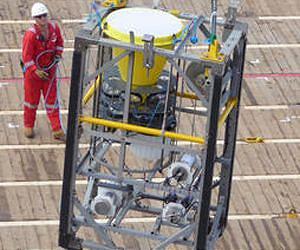
Writing in the scientific journal Nature, scientists have called for increased discussion of independent monitoring of deep-sea hydrocarbon industry activity with the aim of obtaining a better understanding of its ecological impact. The hydrocarbon industry is increasingly searching for hydrocarbon resources at much greater depths and developing drilling technology to exploit them. However, drilling the seafloor at great depths is technically very challenging and carries with it poorly known risks. "The Deepwater Horizon disaster in the Gulf of Mexico last year and the subsequent discovery of unexpected hydrocarbon accumulation at mid-water depths underscores the need for independent monitoring of the ecological effects in the deep sea," said Dr Henry Ruhl of the National oceanography Centre. "In the past, the deep sea has been out of sight and all too often out of mind when it comes to the potentially damaging effects of human activities on the ecosystems that it supports," added Co-signatory Professor Monty Priede of the University of Aberdeen: 'If there is a problem on land, noise, fire, smoke and spills give signals that are obvious anyone in the vicinity, in the deep sea there are no human witnesses' But the situation is changing. Advances in underwater monitoring equipment mean that images and data from the deep seafloor and the overlying water column can now be uploaded to the Internet in real time, and made publically available. "Scientists need observations to help differentiate natural and human induced changes. Remote sensing could both facilitate sustainable resource use and provide an early warning of potential impacts," explained Dr Ruhl. Through projects such as the Deep-ocean Environmental Long-term Observatory System (DELOS), scientists are already working with industry to help protect the marine environment. However, Dr Ruhl and Professor Priede argue independent monitoring is now necessary and that international bodies such as the European Commission and the United Nations could drive progress in this area. Their proposal for increased discussion has been supported by the General Assembly of the European Seas Observatory NETwork (ESONET). Publication: Ruhl, H. A and Priede, I. G. Open up monitoring of deep-sea drilling. Nature vol. 73, 154 (12 May 2011). doi:10.1038/473154b
Related Links - Powering The World in the 21st Century at Energy-Daily.com
|
|
|
| The content herein, unless otherwise known to be public domain, are Copyright 1995-2014 - Space Media Network. AFP, UPI and IANS news wire stories are copyright Agence France-Presse, United Press International and Indo-Asia News Service. ESA Portal Reports are copyright European Space Agency. All NASA sourced material is public domain. Additional copyrights may apply in whole or part to other bona fide parties. Advertising does not imply endorsement,agreement or approval of any opinions, statements or information provided by Space Media Network on any Web page published or hosted by Space Media Network. Privacy Statement |
 del.icio.us
 Digg
Digg Reddit
 Google