


|
|
|
|
|
|
|
|
|
|
|


| . |  |
. |
|
|
|
 by Staff Writers Canberra, Australia (SPX) Jan 27, 2009
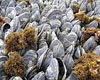
A four-week expedition to explore the deep ocean south-west of Tasmania has revealed new species of animals and more evidence of impacts of increasing carbon dioxide on deep-sea corals. The collaborative voyage of US and Australian researchers was led by chief scientists Dr Jess Adkins from the California Institute of Technology and Dr Ron Thresher from CSIRO's Climate Adaptation and Wealth from Oceans Flagships. "We set out to search for life deeper than any previous voyage in Australian waters," Dr Thresher says. "We also gathered data to assess the threat posed by ocean acidification and climate change on Australia's unique deep-water coral reefs." The survey through the Tasman Fracture Commonwealth Marine Reserve, south-west of Tasmania, explored the near vertical slice in the earth's crust, known as the Tasman Fracture Zone, which drops from approximately 2000 metres to over 4000 metres. "Our sampling documented the deepest known Australian fauna, including a bizarre carnivorous sea squirt, sea spiders and giant sponges, and previously unknown marine communities dominated by gooseneck barnacles and millions of round, purple-spotted sea anemones." All of these new species are located more than 2000 metres below the surface. Vast fields of fossil corals were discovered below 1400 metres, and dated to more than 10,000 years old. The samples collected will be used to determine the periods over the last millions of years when reefs have existed south of Tasmania. They will also provide ancient climate data that contribute to models of regional and global climate change, based on historical circulation patterns in the Southern Ocean. Modern-day deep-water coral reefs were also found, however there is strong evidence that this reef system is dying, with most reef-forming coral deeper than 1300 metres newly dead. "We need to closely analyse the samples and measurements we collected before we can determine what's caused this, as it could be the result of several factors, such as ocean warming, disease or increasing ocean acidity," Dr Thresher says. "Mathematical models predict that we could be seeing impacts of ocean acidification in this region. If our analysis identifies this phenomenon as the cause of the reef system's demise, then the impact we are seeing now below 1300 metres might extend to the shallower portions of the deep-reefs over the next 50 years, threatening this entire community." The international research team aboard the research vessel RV Thomas G. Thompson deployed a deep diving, remotely operated submarine vehicle named Jason, belonging to the Woods Hole Oceanographic Institution. Jason, which is approximately the size of a small car, is capable of collecting samples and data, and photographing and filming areas as deep as 6000 metres. Jason made 14 dives lasting up to 48 hours each and reaching a maximum depth of 4010 metres. The A$2m cost of bringing the RV Thompson and Jason to Australia was met by the US National Science Foundation (NSF). The research was also supported by: the Australian Department of Environment, Water, Heritage and Arts; CSIRO and the Commonwealth Environmental Research Facility (CERF) Marine Biodiversity Hub.
Related Links Scientific submersible makes deep-sea discoveries Water News - Science, Technology and Politics
|
|
|
| The content herein, unless otherwise known to be public domain, are Copyright 1995-2014 - Space Media Network. AFP, UPI and IANS news wire stories are copyright Agence France-Presse, United Press International and Indo-Asia News Service. ESA Portal Reports are copyright European Space Agency. All NASA sourced material is public domain. Additional copyrights may apply in whole or part to other bona fide parties. Advertising does not imply endorsement,agreement or approval of any opinions, statements or information provided by Space Media Network on any Web page published or hosted by Space Media Network. Privacy Statement |
 del.icio.us
 Digg
Digg Reddit
 Google