


|
|
|
|
|
|
|
|
|
|
|


| . |  |
. |
|
|
|
 by Erica Rex for Astrobiology Magazine Moffett Field CA (SPX) Oct 22, 2009
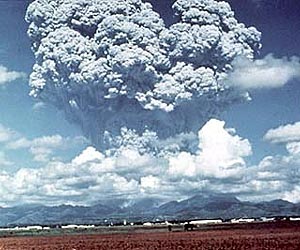
The Hot Zone, a climate change and global warming blog sponsored by the Goddard Institute for Space Studies and Astrobiology Magazine, recently featured a conversation with Dr. Philip Rasch, chief scientist for climate at the Pacific Northwest National Laboratory. Dr. Rasch's work focuses on understanding the connections between clouds, chemistry, and the climate. He co-chairs the Atmospheric Model Working Group of the Community Climate System Model project. Dr. Rasch and his team create mathematical models of what the Earth's climate might look like in the future by varying their assumptions about conditions such as carbon dioxide concentration and temperature. Each of the scenarios created using these models provides insights into what we can do to ameliorate climate change. Among other things, Dr. Rasch has explored the possibilities of geoengineering with aerosols in the stratosphere. The work of Dr. Rasch and his team could help astrobiologists understand how climate change could affect the future of our planets biosphere. Knowledge concerning the interworkings of Earth's climate could also help define the conditions that make a planet habitable for life as we know it. The Hot Zone [astrobio.net]: How viable or realistic is it to imagine using aerosols to reduce the effects of climate change? Dr. Rasch: It is a philosophical issue, among other things. We know aerosol particles cool the planet. Volcanoes in the past, such as the eruption of Pinatubo created climate cooling by producing particles in the atmosphere that lasted for a few years. The questions are: 1) can we make particles like this in sufficient amount to have an effect? and 2) what are the long term consequences of doing this, and can we live with them? Volcanoes are not a perfect analog. Their effects dissipate after several months or years. We'd be putting aerosols into the atmosphere continuously for years at a time. Aerosol particles in the stratosphere change the way sunlight filters to the surface of the Earth. On a clear day, in the absence of pollution and clouds, for instance, most light arrives from a single direction, (called direct sunlight) and some light comes from different directions (called diffuse sunlight) because it has been scattered on its way to the surface by particles or clouds or aerosols. When these get in the way, more sunlight reaches us as diffuse sunlight. Putting more aerosols into the atmosphere increases the amount of light reaching as diffuse sunlight, and decreases the amount of light reaching us as direct sunlight. This has consequences for the planet. Because diffuse sunlight reaches more deeply into plant canopies, it changes the way they grow. It's important to note that some plants grow better with diffuse sunlight. Others do better in direct sunlight. The Hot Zone [astrobio.net]: Some plants would thrive, in other words, in a geoengineered world, and some would not? Dr. Rasch: Yes. Another consideration has to do with solar energy. Solar power uses heat to capture and concentrate the effects of sunlight to drive turbines and produce power. A change in the amount of direct sunlight would have a significant impact on the use of solar power for some kinds of solar technology. The Hot Zone [astrobio.net]: Several articles have mentioned the impact geoengineering would have on the ozone layer. Could you explain that? Dr. Rasch: You could say geoengineering using sulfate aerosols might cause more depletion of the ozone layer, and yet there is another affect that may protect us from the consequences. Ozone high in the atmosphere is depleted by chlorofluorocarbons. The presence of sulfate aerosol particles high in the stratosphere contributes to chlorine activation, and therefore, to ozone depletion. If more ozone is depleted, more ultraviolet (UV) light would be expected to reach the surface. We know that has deleterious effects. But these aerosols also reduce the amount of UV light reaching the Earth's surface. So at this point in the game, it may be that atmospheric aerosols will cause both an increase and a decrease in the amount of UV light that reaches the surface. We don't know which effect will dominate. The Hot Zone [astrobio.net]: And other potential effects? Dr. Rasch: Some things we simply don't know. For instance: the sky would appear less blue, sunrises and sunsets would appear redder. We also know that aerosols will change precipitation patterns. We've observed that after volcanic eruptions, there is less rainfall overland areas, primarily we think because land masses tend to cool more quickly than the ocean. Wind patterns might change. We would not expect the temperature gradient produced by geoengineering to be as large as it is following volcanoes because rather than a sudden catastrophic change, like a volcano, geoengineering would be more or less continuous. We do know that there would be some perturbation in precipitation. It could be relatively small. Different models produce different answers to this. Projecting regional changes to precipitation with models is very difficult, and it remains an important area of research. Models do suggest two things with relative certainty: 1) that aerosols injected into the atmosphere will cool the planet; and 2) that the surface area and thickness of polar sea ice will increase, which would be a good thing in terms of species survival.
Related Links Pacific Northwest National Laboratory Climate Science News - Modeling, Mitigation Adaptation
|
|
|
| The content herein, unless otherwise known to be public domain, are Copyright 1995-2014 - Space Media Network. AFP, UPI and IANS news wire stories are copyright Agence France-Presse, United Press International and Indo-Asia News Service. ESA Portal Reports are copyright European Space Agency. All NASA sourced material is public domain. Additional copyrights may apply in whole or part to other bona fide parties. Advertising does not imply endorsement,agreement or approval of any opinions, statements or information provided by Space Media Network on any Web page published or hosted by Space Media Network. Privacy Statement |
 del.icio.us
 Digg
Digg Reddit
 Google