



|
|
|
|
|
|
|
|
|
|
|


| . |  |
. |
|
|
|
 by Staff Writers Paris (AFP) July 1, 2008
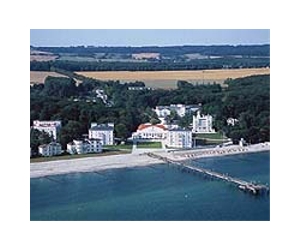
The Group of Eight (G8) is set to fudge its decision on climate change next week, reflecting the issue's weaker status in the absence of European campaigning and in the face of sky-high oil prices. A year ago, on the back of blunt warnings by UN scientists, global warming dominated the G8 summit in Heiligendamm. Overcoming fierce US resistance, Germany coaxed the rich nations' club into agreeing to "consider seriously" the aim of at least halving worldwide emissions of greenhouse gases by 2050. Today, scientific concern about climate change has if anything deepened -- but the political focus on it has blurred. "We have resources. We have technologies. But largely lacking is the political will," UN Secretary General Ban Ki-moon said on Sunday ahead of the July 7-9 gathering in Toyako, northern Japan. European diplomats predict a summit compromise that will not take Heiligendamm's sketchy pledge any distance farther. "What you are likely to see is a large rhetorical statement, saying that everyone is committed to reduce their emissions," agrees Phil Clapp of the green organisation the Pew Environment Group. According to the Japanese daily Nikkei, a draft statement will seek agreement on setting country-by-country goals on reducing emissions beyond 2013. This area is already covered by UN talks on a pact to succeed the provisions of the Kyoto Protocol beyond 2012. The draft also says the G8 economies intend to jointly invest more than 10 billion dollars on research and development in climate-change technology, such as underground storage of carbon dioxide (CO2), Nikkei said. On July 9, six emerging giants -- Brazil, China, India, Indonesia, Mexico and South Africa -- plus Australia and South Korea will join the G8 leaders under a US initiative to accelerate agreement among economies that account for some 80 percent of all emissions. But, meeting in Seoul on June 21 and 22, this group showed there were deep divisions between developed and emerging countries. President George W. Bush wants fast-growing goliaths such as China and India to commit to legally-binding curbs on their emissions before the United States returns to a Kyoto-style format, which Bush rejected in 2001. The European sources see two reasons why climate change has dwindled in clout. "One reason is that there's no driver at the wheel," said one expert. "The European Union has been providing the political impetus but is now bogged down in negotiations on agreeing its own climate and energy package. And the United States is locked into the presidential election campaign. "Another is that the surge in oil prices has shifted debate towards energy security." Ahead of the 2007 summit, the EU threw down the gauntlet to its G8 partners, vowing to reduce its emissions by 20 percent by 2020, compared with 1990 levels, and offering to go to 30 percent if others followed suit. Environment ministers from the 27-nation European bloc stage an informal meeting in Paris this Thursday and Friday, with energy ministers following suit on Friday and Saturday. They face the nitty-gritty of how to achieve the 20-percent emissions pledge while at the same time boosting the share of renewables in the energy mix to 20 percent, including a 10-percent share for biofuels. The so-called climate and energy package, put forward by the European Commission in January 2007, has come under attack from several quarters. Doubts have emerged over the target for biofuels, given the evidence that the switch to fuel crops is pushing food prices higher, while eastern European nations are seeking exclusions or easier terms. They fret about the cost of these changes at a time when their economies are struggling with higher energy prices and dependence on Russian gas. France, taking the helm of the EU for six months from July 1, wants a deal by year's end, although the complexity and national interests involved mean a process that "would normally take three years," a negotiator observed.
Related Links Climate Science News - Modeling, Mitigation Adaptation
|
|
|
| The content herein, unless otherwise known to be public domain, are Copyright 1995-2014 - Space Media Network. AFP, UPI and IANS news wire stories are copyright Agence France-Presse, United Press International and Indo-Asia News Service. ESA Portal Reports are copyright European Space Agency. All NASA sourced material is public domain. Additional copyrights may apply in whole or part to other bona fide parties. Advertising does not imply endorsement,agreement or approval of any opinions, statements or information provided by Space Media Network on any Web page published or hosted by Space Media Network. Privacy Statement |
 del.icio.us
 Digg
Digg Reddit
 Google