



|
|
|
|
|
|
|
|
|
|
|


| . |  |
. |
|
|
|
 by Staff Writers New Brunswick NJ (SPX) Jun 23, 2010
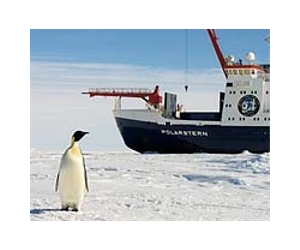
Rutgers' Oscar Schofield and five colleagues from other institutions have published in Science, calling for expanded ocean-observing in the Antarctic, particularly in the Western Antarctic Peninsula, or WAP. This mountainous arm of the continent stretches north toward South America. In their review paper, the co-authors, who have done research in the Antarctic, often together, argue that research in this region is imperative: The WAP's climate, they say, is changing faster than the climate in the rest of the continent, while Antarctica's climate is changing faster than anywhere else on the planet. The authors' case for a greatly expanded ocean-observing capability in the peninsula is stark. They observe that 87 percent of the peninsula's glaciers are in retreat, the ice season has shortened by 90 days, and perennial sea ice is no longer a feature of this environment. They also point out that these changes are accelerating. Until recently, most oceanographic research in the Antarctic was done from government-funded ships. Ships are expensive, limited by harsh weather, and only useful during the Antarctic summer. Scientists also have been using satellite data for the past 30 years, but since the Antarctic is often cloud-covered, such data are often incomplete. Schofield and his colleagues suggest a "nested, multi-platform" approach to Antarctic research. This strategy would employ ships, satellites, drifting sensors, submersible robots, and sensors mounted on animals such as seals and whales. The authors write that such a strategy should quantify a heat budget (the sum of incoming and outgoing heat) for the atmosphere and ocean, help scientists understand how the deep ocean is interacting with shelf waters, how this flux changes with time, and how this affects regional marine climate, ice dynamics and ecology. The authors write that the ocean surrounding Antarctica is warming and that this warming has driven the deglaciation of the peninsula. The interplay between ice, atmosphere and ocean in the in the peninsula produces a positive feedback - a situation in which a system responds to changes by amplifying subsequent changes, they say. In the case of the Western Antarctic Peninsula, this means that ice, ocean, and atmosphere work to increase each other's temperature and the rate at which their temperatures increase. However, the authors report that the mechanism of this interplay is not well understood, and expanded ocean-observing systems will help scientific understanding.
Related Links Rutgers Water News - Science, Technology and Politics
|
|
|
| The content herein, unless otherwise known to be public domain, are Copyright 1995-2014 - Space Media Network. AFP, UPI and IANS news wire stories are copyright Agence France-Presse, United Press International and Indo-Asia News Service. ESA Portal Reports are copyright European Space Agency. All NASA sourced material is public domain. Additional copyrights may apply in whole or part to other bona fide parties. Advertising does not imply endorsement,agreement or approval of any opinions, statements or information provided by Space Media Network on any Web page published or hosted by Space Media Network. Privacy Statement |
 del.icio.us
 Digg
Digg Reddit
 Google