


Subscribe free to our newsletters via your
. 24/7 Space News .


CHIP TECH
NASA device helps detect biohazards
by Staff Writers
Moffett Field, Calif. (UPI) May 20, 2008


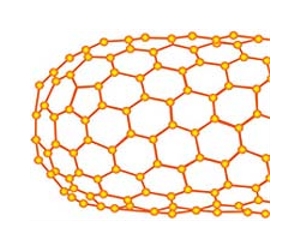
disclaimer: image is for illustration purposes only

The U.S. space agency says it's developed a nanotechnology-based biosensor that can detect trace amounts of biohazards.

The device, developed at the National Aeronautics and Space Administration's Ames Research Center in California, can detect specific bacteria, viruses and parasites. NASA said the biosensor will be used to help prevent the spread of potentially deadly biohazards in water, food and other contaminated sources.

The technology has been licensed to Early Warning Inc. of Troy, N.Y.

"The biosensor makes use of ultra-sensitive carbon nanotubes which can detect biohazards at very low levels," explained Meyya Meyyappan, chief scientist for exploration technology and former director of the Center for Nanotechnology at Ames. "When biohazards are present, the biosensor generates an electrical signal, which is used to determine the presence and concentration levels of specific micro-organisms in the sample. Because of their tiny size, millions of nanotubes can fit on a single biosensor chip."

Early Warning officials said food and beverage companies, water agencies, industrial plants, hospitals and airlines could use the biosensor to prevent outbreaks of illnesses caused by pathogens -- and do so without needing a laboratory or technicians.

.


Related Links
Computer Chip Architecture, Technology and Manufacture
Nano Technology News From SpaceMart.com


Comment on this article via your Facebook, Yahoo, AOL, Hotmail login.

Share this article via these popular social media networks
del.icio.usdel.icio.us DiggDigg RedditReddit GoogleGoogle


CHIP TECH
Raytheon-Led Team Grows Semiconductor Compounds On Silicon
Tewksbury MA (SPX) May 15, 2008
A Raytheon-led team has accomplished a key step demonstrating that affordable, high-performance circuits for military applications can be produced by growing semiconductor compounds directly on silicon. Demonstrating this highly innovative technique is part of a $6.5 million contract awarded by the Office of Naval Research and funded by the Defense Advanced Research Projects Agency. It is ... read more


CHIP TECH
Astronaut Health On Moon May Depend On Good Dusting

Inhaling For Exploration As Scientists Test Lunar Breathing System

Send Your Name To The Moon With New Lunar Mission

Shanghai's Own Moon Vehicle Passes Test

CHIP TECH
Kickoff For Phoenix Landing Blog

Mars Express Mission Controllers Ready For NASA Phoenix Landing

Rendezvous With Mars

Phoenix Probe Due To Touch Down On Martian Surface

CHIP TECH
NASA's 50th birthday marked in art exhibit

NASA Seeks Industry Partners For Innovation Transfusion Program

ESA Astronaut Recruitment Now Open

On The Moon Inhaling Is A Silent Affair

CHIP TECH
Suits For Shenzhou

China Launches New Space Tracking Ship To Serve Shenzhou VII

Three Rocketeers For Shenzhou

China's space development can pose military threat: Japan

CHIP TECH
NASA: Space station view is good this week

NASA TV Airs High-Def Day In The Life Of An ISS Astronaut

Russian Cargo Spacecraft Docks With ISS

NASA Extends Space Station Contract With ARES

CHIP TECH
Sea Launch Initiates Countdown For Launch Of Galaxy 18

Spaceport Kourou Welcomes Fourth Ariane 5 Launch Campaign For 2008

Sweden Launches MASER 11 Sounding Rocket

Arianespace Takes Delivery Of Its Third Ariane 5 In 2008

CHIP TECH
Planets By The Dozen

Record-Setting Laser May Aid Searches For Earthlike Planets

Exo-Planet Roadmap Advisory Team Appointed By ESA

Plan To Identify Watery Earth-Like Planets Develops

CHIP TECH
Self-Repairing Aircraft Could Revolutionize Aviation Safety

Northrop Grumman Resonating Gyro Achieves 10 Million Operating Hours In Space

US, China Space Debris Still Orbiting Earth

LIDAR Detector Will Build Three-Dimensional Super Roadmaps Of Planets And Moons


The content herein, unless otherwise known to be public domain, are Copyright 1995-2014 - Space Media Network. AFP, UPI and IANS news wire stories are copyright Agence France-Presse, United Press International and Indo-Asia News Service. ESA Portal Reports are copyright European Space Agency. All NASA sourced material is public domain. Additional copyrights may apply in whole or part to other bona fide parties. Advertising does not imply endorsement,agreement or approval of any opinions, statements or information provided by Space Media Network on any Web page published or hosted by Space Media Network. Privacy Statement