U.S. scientists say they've created a microchip that uses 1/30,000th the power in sleep mode and 1/10th as much in active mode than regular chips.
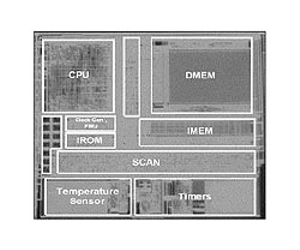
The Phoenix Processor -- developed at the University of Michigan and which set a low-power record -- is intended for use in cutting-edge sensor-based devices such as medical implants, environment monitors or surveillance equipment.
The project leaders, doctoral students Scott Hanson and Mingoo Seok, said their chip consumes 30 picowatts during sleep mode. A picowatt is one-trillionth of a watt. The researchers said the energy stored in a watch battery would theoretically be enough to run the Phoenix for 263 years.
Hanson will present the research Friday during the Institute of Electrical and Electronics Engineers' Symposium on VLSI Circuits.













 del.icio.us
 Digg
Digg Reddit
 Google